Notebook
"The nourishing fruit of the historically understood contains time as a precious but tasteless seed." (Walter Benjamin)May 14, 2006
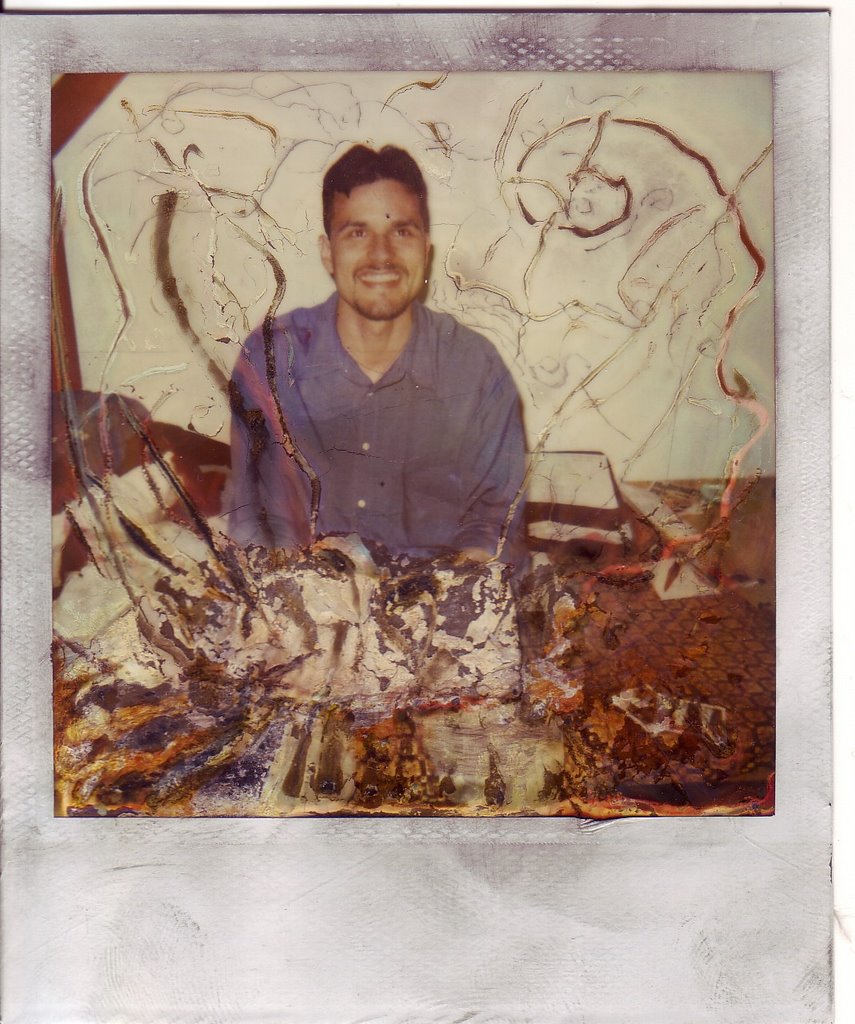
Oct 4, 2005
La traducción es el agua de mi tercera sed
Alfredo Silva Estrada
Papel Literario
El Nacional
1 Octubre 2005
Paul Valéry, con un espíritu que podría parecer un tanto masoquista —él que amaba la dificultad y los obstáculos y que a menudo sabía vencerlos muy airosamente— se complacía en recordar aquella consideración de Mallarmé que lamentaba en la lengua francesa lo que era para él la terrible incoincidencia entre la apariencia sensible de los vocablos, su repercusión sensitiva e imaginaria en nosotros y lo que esos vocablos significan estrictamente. El poeta sufre por la falta de coincidencia, la falta de correspondencia, la asimetría entre lo que Valéry llamará sonido y sentido, es decir, entre significante y significado, entre las cualidades sensibles de la palabra y lo que ella significa. Le molestaba a Stéphane Mallarmé, por ejemplo, que en francés las palabras día y noche (jour et nuit) tuvieran para sus oídos una sonoridad que en su sensibilidad y su imaginación repercutía exactamente de manera contraria a su significado.
Jour (día) sonido oscuro como la oscuridad de su vocal y nuit (noche) un sonido brillante, vertical, claro.
El esfuerzo del poeta consistirá entonces, por así decirlo —y en esto, coinciden las consideraciones estéticas de Paul Valéry y de Jean-Paul Sartre acerca de las diferencias entre prosa y poesía, y también las de Octavio Paz en El arco y la lira que, a decir verdad, casi repite y comenta indirectamente los estudios de los dos autores citados: Valéry y Sartre—, el esfuerzo del poeta, insito, consistirá en crear, como en un acto de magia o de artificio, mediante el poder encantatorio del verbo poético, mediante la fusión de ritmo e imagen, esa coincidencia o esa ilusión de coincidencia, entre sonido y sentido, significante y significado, voz y pensamiento.
Esta condición de poeta —escribía Valéry— (es decir, crear la ilusión de coincidencia entre el aspecto sensible y la significación de la palabra), parece exigir lo imposible...
No hay ninguna relación entre el sonido y el sentido de la palabra... Sin contar con las distancias y las diferencias de una lengua a otra. La misma cosa se llama horse en inglés, ippos en griego, equus en latín, cheval en francés.
Caballo en español, pero ninguna operación sobre ninguno de estos términos me dará la idea del animal en cuestión; y, a la inversa, ninguna operación sobre esta idea me entregará ninguna de estas palabras... Y, no obstante —prosigue Valéry—, el trabajo del poeta es darnos la sensación de esa unión íntima entre la palabra y el espíritu, entre el sonido y el sentido...
El poeta, según Valéry, tiene que enfrentarse con el único instrumento que le es dado de antemano: el lenguaje tal como se le entrega y circula en su función utilitaria, en nuestra prosa de todos los días, precisa o confusa: el lenguaje medio dirigido a un fin concreto, o el lenguaje banal de lo cotidiano trocado en lo absurdo, tal como lo ridiculiza genialmente Eugène Ionesco: Para Valéry: un material mancillado, manoseado, como un billete sucio que ha pasado de mano en mano.
“Un montón de trapos viejos —dirá Francis Ponge en Razones para escribir— que, de tan sucios, no se pueden agarrar ni con pinzas, he aquí lo que se nos da a remover, a sacudir, a cambiar de sitio.” En ese cambiar de sitio se efectúa el acto de la transmutación poética: el paso decidido y decisivo de un orden a otro orden. En ese nuevo orden que es el poema ya no hay —o ya no debería haber— dicotomía entre sonido y sentido, entre significante y significado, y, ni mucho menos, entre las categorías, por demás caducas, de forma y contenido.
Si el acto poético es un cambiar de sitio, un paso de un orden a otro orden que suponía el desafío a una coincidencia en principio imposible entre los vocablos y su significación, la traducción poética también lo es con una dificultad y una exigencia llevadas a cabo a otro plano.
Cuando el poeta comienza a escribir un poema parte de algo inexistente, de algo que todavía no es, que no está nominado: vacío impulsor, cúmulo confuso de experiencias que no bastan para constituir un cuerpo verbal, incompletud, carencia, en fin, quién sabe, ni el mismo poeta lo sabe. Si lo supiera plenamente, no sentiría la necesidad imperiosa de escribir su poema, de arrojarse a la sorpresa del poema que completará fugazmente su existencia.
Cuando un poeta enfrenta la traducción de un texto poético, sucede algo muy diferente: parte de algo ya dado, de esos datos ya existentes que él debe trasponer en una expansión respetuosa del sentido y de los contenidos sensibles y significantes que se le proponen.
Encarar la traducción en toda su dificultad (que se confunde con el goce), como una tarea en principio imposible es el punto de partida, el desafío que nos hemos planteado en los talleres de traducción que han estado bajo mi coordinación. Hacer que este imposible se torne posible a través de una práctica compartida. A mi manera de ver, no hay teoría previa en el ejercicio de la traducción poética. Afirma el poeta francés meridional Pierre Torreilles —afirmación con la cual me identifico plenamente— que la poesía es, ante todo una práctica. Práctica que, curiosa y contradictoriamente, no está dirigida al mundo práctico y utilitario ni tampoco a los intereses del sentido común. La poesía, pues, en todas sus manifestaciones, es ante todo una práctica.
“El poeta practica —escribe Pierre Torreilles en Práctica de la poesía— esto quiere decir que el poema se fabrica a partir de un material banal, el vocabulario, a partir de leyes comunes, la síntesis, la puntuación...”
(Habría que añadir, contrariando un poco a Torreilles, que semejante práctica incluye también, muy necesariamente, la trasgresión, el irrespeto, la violación a esas leyes comunes: sintaxis, puntuación, comportamientos convencionales, generalmente aceptados).
Un ejemplo de algún principio teórico que he sacado de mi experiencia de traductor, sería la obediencia al sentido de cada vocablo y al sentido total del poema. No sacrificar jamás el sentido del poema a una supuesta belleza, a una caprichosa eufonía.
Cuando es el caso de traducir un poema rimado, esquivo la rima en favor del sentido. Tratando, claro está, de mantenerme fiel, hasta donde sea posible, a los rasgos fisonómicos que el texto me propone.
Partiendo de mi experiencia de traductor y apoyándome en ella, concibo los talleres de traducción poética —y esto parece casi redundante— como una experiencia compartida: fundamentalmente práctica, insisto, e inevitablemente reflexiva por los problemas que, sin duda, nos plantea en cada caso, en cada paso. Una experiencia compartida que nos permite internarnos en la complejidad y riqueza (placer y dificultad / dificultad y placer) de ese acto indiscutiblemente creador que es la traducción de un poema.
Cuando concluí mi versión de Le parti pris des choses, de Ponge, anoté a manera de postfacio: traducir poesía es realizar, cuando no un mero acto fallido, un acto de equilibrio inestable (imposible) entre dos imposibles: literalidad y fiel correspondencia, tensas y en vilo por apego y respeto al texto original. Pero de esta relación, de esta tensión entre dos términos ideales no resulta un tercer imposible sino un segundo cuerpo cuya realidad tiene sentido por aproximación a ese primer cuerpo irremplazable que es el original mismo. Entonces, traducir poesía es aproximarse, aceptar el reto (relever le défi, locución grata a Ponge), y aceptarlo a sabiendas de que, por mucho que tengamos presente aquel escrúpulo del que hablaba Simone Weil, “el escrúpulo religioso de no agregar nada,” habremos de agregar, a pesar nuestro, precisa y paradójicamente por apego y el respeto al texto original, y habremos de aceptar la porción intraducible, irreductible, no con fácil resignación sino con el esfuerzo de extremar nuestra vigilancia sobre la tensión de ese equilibrio inalcanzable entre literalidad y fiel correspondencia y, a la vez, entre ese primer cuerpo que va a suscitar un segundo cuerpo por aproximación.
Sabemos que, así como sería preciso considerar, en los mejores casos, según Ponge, “una retórica por poema,” sería preciso inventar, o descubrir, una dialéctica y una técnica por traducción: porque el cuerpo primero, el texto original, suscita a su manera sus relaciones peculiares, sus exigencias, sus equilibrios o desniveles especiales.
Y el placer de traducir se combina cada vez de manera diferente con la dificultad de traducir. Técnica y dialéctica nuevas las busco en cada una de mis versiones, especialmente en las más extensas y laboriosas: cada una me ha reclamado, desde el silencio múltiple del texto original, dialéctica y técnicas inexploradas.
¿Qué otra universalidad puede alcanzar la poesía sino a partir del arraigo y del proceso de excavación —a menudo evolución, subversión, refrescamiento— en la parcela de cada idioma? Es posible trasladar la secreción, la concreción particular de cada poema a la parcela de nuestro idioma. Pero sí es posible, mediante un acto de apasionada y vigilante aproximación (adaptación, dice Vahé Godel), crear un cuerpo verbal que se justifique por la fidelidad a la fuerza nominativa que anima el texto original.
“Uno se consagra a los otros para conocerse mejor a sí mismo,” ha escrito alguna vez mi amigo el poeta suizo Vahé Godel, traductor del armenio al francés. Aunque puede haber mucho de verdad en esa afirmación confieso que nunca, al menos de manera consciente, me he regido exclusivamente por ese designio. Pero no hay duda de que en cada traducción, inevitablemente, uno hasta cierto punto se proyecta, y encuentra algo de sí mismo, una afinidad parcial, misteriosa, que no se había sentido al comienzo del trabajo. Quiero añadir que no sólo traduzco poetas que me son marcadamente afines, sino también aquellos cuya palpitación extraña, muy diferente a la mía, muy distante, me capta desde la primera lectura. Traduzco (prefiero decir: vierto) como por una fatalidad, una pasión, y una insaciable curiosidad de mi espíritu, y una necesidad de darme a los otros, de abrir mis fronteras.
El proceso de verter un poema de una lengua a otra, es para mí una internación que me gustaría comentar repitiendo unas palabras de Vahé Godel, porque las siento profundamente hermanadas a mis propias vivencias de traductor: “Traducir, dejarse atravesar. O, más simplemente, leer, recorrer un espacio, explorar un subsuelo, penetrar en el campo del poema: refugiarse en el canto del otro: consumirse, cambiar de piel, en el corazón de una palabra bárbara.”
“La poesía es natural. Es el agua de mi segunda sed,” escribe André Chedid en Tierra y poesía. Traducir se ha transformado para mí en una segunda naturaleza que no oprime ni ahoga a la primera: es el agua de mi tercera sed.
Esa sed nunca saciada tiene un origen muy preciso y, para mí, muy significativo.
Adolescente, en Roma, cayó en mis manos un ejemplar de Las iluminaciones de Rimbaud, traducidas al italiano por Mario Matucci, un librito bilingüe que todavía conservo. Leerlo fue una toma de conciencia, una revelación de que la poesía no podía una simple efusión sentimental, como la que estallaba en mis primeros poemas.
Iba de una página a otra de Las iluminaciones con un vértigo que me deslumbraba y a la vez me despejaba interiormente.
Aquella lectura de Rimbaud a través de una traducción, como ya lo he expresado, dio un vuelco a mi visión de la poesía e hizo cambiar el rumbo de mi escritura.
El trabajo en colaboración de dos poetas cercanos es circunstancia privilegiada en este dominio de la traducción. Por ejemplo, al traducir a Fernand Verhesen, he seguido con mayor experiencia un procedimiento parecido al que comencé a aplicar casi ingenuamente en mi labor con Uffe Harder.
La traducción de los poemas de Verhesen me ha reservado sorpresas muy gratas.
Cuando traducía Franchir la nuit (en prosa en el original) sentía que en mi versión iba latiendo un ritmo en verso que se me imponía, que no pude eludir. Quedó así, con el asentimiento y también con el asombro del autor: Franquear la noche, en versos libres.
Lo más curioso fue que Verhesen, sin que yo lo supiera e ignorando él aún mi versión abusiva de Franchir la nuit que estaba en proceso, regresaba entonces como requerimiento de la evolución de su escritura, al poema en verso.
Dije que traducir poesía se ha transformado para mí en una segunda naturaleza.
Al traducir, doy suma importancia al ritmo.
Traduzco a menudo en alta voz, para que el oído se satisfaga. Me gusta que mi versión quede como escrita directamente en español, sin artificios y sin que se note el esfuerzo.
Homenajes, sin duda, destinado al oyente, me ayudó a afinar esta exigencia auditiva.
Al traducir el Mediterráneo de Montale, le pedí a mi versión que en ella se escuchase la aspereza esencial, el rodar crepitante de los guijarros carcomidos por la salmuera que resuenan en el poema original.
La importancia que doy a la estructura rítmica, me parece que quedó especialmente evidenciada en mi versión de La Joven Parca de Paul Valéry, donde, teniendo constantemente en cuenta su concepción acerca del sonido y el sentido inextricables en todo auténtico poema, osé la aventura, en principio imposible: verter en versos de extensiones muy libres los alejandrinos del original, porque sucesivos intentos me convencieron de que sólo así: sin empeñarme en una rima y una métrica estrictas que habrían resultado, sin duda, forzadas; pero siempre en obediencia a la aspiración de cierto ritmo hacia el nuevo cuerpo verbal, podría acercarme —con sostenido fervor y aunque fuese a través de inevitables distancias— al sentido universal del poema.
Traducir poemas rimados es, en cierto modo, a mi juicio y sentir -y precisamente por respeto al sentido -, esquivar la rima y el metro del texto original.
Hay que decir lo que el poeta dice, respetar su pensamiento y sus imágenes, pero en una estructura nueva y balanceada, una emanación fluyente que cante y recree, sin traicionar. Las traducciones rimadas de poemas rimados, que tanto abundan y que tanto daño hacen, me parecen aberrantes y atentatorias porque desvirtúan lo que está dicho en el original.
Los poemas en verso breve y rimado (pienso, por ejemplo, en Chanson del plus haute tour, L’ Eternité, Age d’ or de Rimbaud) y los que tienen exceso de juego de palabras -o donde el juego de palabras es medular y totalizador- son los que, a mi manera de ver, presentan mayor dificultad para la traducción. En el primer caso, porque la brevedad rigurosa de la forma obstaculiza el hallazgo de otra similar en español que no rompa lo que el poema dice eufónicamente. Y en el segundo, porque las equivalencias son muchas veces, en verdad, díscolas o inexistentes.
Yves Bonnefoy en Rimbaud por sí mismo nos propone escuchar con vehemencia otra vez a Rimbaud. En la elaboración de mi Antología de Pierre Reverdy, la petición de Bonnefoy no cesaba de alcanzarme como un eco. Y se transformaba en lo que yo me repetía, convencido: traducir es, ante todo, escuchar, esforzarse con pasión en escuchar al poeta. Escuchar a Reverdy —escribo en El artesano del silencio— es permitir que él nos hable al oído: “Escucha —nos susurra en Mi libro de a bordo— yo te hablo a ti, al oído. ¿Dónde estás tú, tú que eres el único capaz de escucharme, de entenderme?” Mas, ¿quién habla en los poemas de Reverdy? ¿Quién es ese sujeto que se esconde en el yo, en el uno, en cualquiera, en alguien, en alguno, en nosotros, para ser todos o ninguno? Es este sujeto huraño a quien es preciso escuchar para poder verter, con desvelo y devoción, una de las escrituras poéticas más complejas, fundamentadas (y fundamentales) de nuestro tiempo, proyectada a la luz del presente en el renuevo inagotable de sus recurrencias, sus situaciones y hasta sus obsesiones más íntimas en un dinamismo abierto e infinito.
Traducir: internarse, escuchar íntimamente, ser uno con el otro, para exteriorizar y delimitar una confluencia que demostrará en cada nueva lectura la esencia universal de la poesía.
(Alfredo Silva Estrada, El Nacional, 1 Octubre 2005)
Alfredo Silva Estrada
Papel Literario
El Nacional
1 Octubre 2005
Paul Valéry, con un espíritu que podría parecer un tanto masoquista —él que amaba la dificultad y los obstáculos y que a menudo sabía vencerlos muy airosamente— se complacía en recordar aquella consideración de Mallarmé que lamentaba en la lengua francesa lo que era para él la terrible incoincidencia entre la apariencia sensible de los vocablos, su repercusión sensitiva e imaginaria en nosotros y lo que esos vocablos significan estrictamente. El poeta sufre por la falta de coincidencia, la falta de correspondencia, la asimetría entre lo que Valéry llamará sonido y sentido, es decir, entre significante y significado, entre las cualidades sensibles de la palabra y lo que ella significa. Le molestaba a Stéphane Mallarmé, por ejemplo, que en francés las palabras día y noche (jour et nuit) tuvieran para sus oídos una sonoridad que en su sensibilidad y su imaginación repercutía exactamente de manera contraria a su significado.
Jour (día) sonido oscuro como la oscuridad de su vocal y nuit (noche) un sonido brillante, vertical, claro.
El esfuerzo del poeta consistirá entonces, por así decirlo —y en esto, coinciden las consideraciones estéticas de Paul Valéry y de Jean-Paul Sartre acerca de las diferencias entre prosa y poesía, y también las de Octavio Paz en El arco y la lira que, a decir verdad, casi repite y comenta indirectamente los estudios de los dos autores citados: Valéry y Sartre—, el esfuerzo del poeta, insito, consistirá en crear, como en un acto de magia o de artificio, mediante el poder encantatorio del verbo poético, mediante la fusión de ritmo e imagen, esa coincidencia o esa ilusión de coincidencia, entre sonido y sentido, significante y significado, voz y pensamiento.
Esta condición de poeta —escribía Valéry— (es decir, crear la ilusión de coincidencia entre el aspecto sensible y la significación de la palabra), parece exigir lo imposible...
No hay ninguna relación entre el sonido y el sentido de la palabra... Sin contar con las distancias y las diferencias de una lengua a otra. La misma cosa se llama horse en inglés, ippos en griego, equus en latín, cheval en francés.
Caballo en español, pero ninguna operación sobre ninguno de estos términos me dará la idea del animal en cuestión; y, a la inversa, ninguna operación sobre esta idea me entregará ninguna de estas palabras... Y, no obstante —prosigue Valéry—, el trabajo del poeta es darnos la sensación de esa unión íntima entre la palabra y el espíritu, entre el sonido y el sentido...
El poeta, según Valéry, tiene que enfrentarse con el único instrumento que le es dado de antemano: el lenguaje tal como se le entrega y circula en su función utilitaria, en nuestra prosa de todos los días, precisa o confusa: el lenguaje medio dirigido a un fin concreto, o el lenguaje banal de lo cotidiano trocado en lo absurdo, tal como lo ridiculiza genialmente Eugène Ionesco: Para Valéry: un material mancillado, manoseado, como un billete sucio que ha pasado de mano en mano.
“Un montón de trapos viejos —dirá Francis Ponge en Razones para escribir— que, de tan sucios, no se pueden agarrar ni con pinzas, he aquí lo que se nos da a remover, a sacudir, a cambiar de sitio.” En ese cambiar de sitio se efectúa el acto de la transmutación poética: el paso decidido y decisivo de un orden a otro orden. En ese nuevo orden que es el poema ya no hay —o ya no debería haber— dicotomía entre sonido y sentido, entre significante y significado, y, ni mucho menos, entre las categorías, por demás caducas, de forma y contenido.
Si el acto poético es un cambiar de sitio, un paso de un orden a otro orden que suponía el desafío a una coincidencia en principio imposible entre los vocablos y su significación, la traducción poética también lo es con una dificultad y una exigencia llevadas a cabo a otro plano.
Cuando el poeta comienza a escribir un poema parte de algo inexistente, de algo que todavía no es, que no está nominado: vacío impulsor, cúmulo confuso de experiencias que no bastan para constituir un cuerpo verbal, incompletud, carencia, en fin, quién sabe, ni el mismo poeta lo sabe. Si lo supiera plenamente, no sentiría la necesidad imperiosa de escribir su poema, de arrojarse a la sorpresa del poema que completará fugazmente su existencia.
Cuando un poeta enfrenta la traducción de un texto poético, sucede algo muy diferente: parte de algo ya dado, de esos datos ya existentes que él debe trasponer en una expansión respetuosa del sentido y de los contenidos sensibles y significantes que se le proponen.
Encarar la traducción en toda su dificultad (que se confunde con el goce), como una tarea en principio imposible es el punto de partida, el desafío que nos hemos planteado en los talleres de traducción que han estado bajo mi coordinación. Hacer que este imposible se torne posible a través de una práctica compartida. A mi manera de ver, no hay teoría previa en el ejercicio de la traducción poética. Afirma el poeta francés meridional Pierre Torreilles —afirmación con la cual me identifico plenamente— que la poesía es, ante todo una práctica. Práctica que, curiosa y contradictoriamente, no está dirigida al mundo práctico y utilitario ni tampoco a los intereses del sentido común. La poesía, pues, en todas sus manifestaciones, es ante todo una práctica.
“El poeta practica —escribe Pierre Torreilles en Práctica de la poesía— esto quiere decir que el poema se fabrica a partir de un material banal, el vocabulario, a partir de leyes comunes, la síntesis, la puntuación...”
(Habría que añadir, contrariando un poco a Torreilles, que semejante práctica incluye también, muy necesariamente, la trasgresión, el irrespeto, la violación a esas leyes comunes: sintaxis, puntuación, comportamientos convencionales, generalmente aceptados).
Un ejemplo de algún principio teórico que he sacado de mi experiencia de traductor, sería la obediencia al sentido de cada vocablo y al sentido total del poema. No sacrificar jamás el sentido del poema a una supuesta belleza, a una caprichosa eufonía.
Cuando es el caso de traducir un poema rimado, esquivo la rima en favor del sentido. Tratando, claro está, de mantenerme fiel, hasta donde sea posible, a los rasgos fisonómicos que el texto me propone.
Partiendo de mi experiencia de traductor y apoyándome en ella, concibo los talleres de traducción poética —y esto parece casi redundante— como una experiencia compartida: fundamentalmente práctica, insisto, e inevitablemente reflexiva por los problemas que, sin duda, nos plantea en cada caso, en cada paso. Una experiencia compartida que nos permite internarnos en la complejidad y riqueza (placer y dificultad / dificultad y placer) de ese acto indiscutiblemente creador que es la traducción de un poema.
Cuando concluí mi versión de Le parti pris des choses, de Ponge, anoté a manera de postfacio: traducir poesía es realizar, cuando no un mero acto fallido, un acto de equilibrio inestable (imposible) entre dos imposibles: literalidad y fiel correspondencia, tensas y en vilo por apego y respeto al texto original. Pero de esta relación, de esta tensión entre dos términos ideales no resulta un tercer imposible sino un segundo cuerpo cuya realidad tiene sentido por aproximación a ese primer cuerpo irremplazable que es el original mismo. Entonces, traducir poesía es aproximarse, aceptar el reto (relever le défi, locución grata a Ponge), y aceptarlo a sabiendas de que, por mucho que tengamos presente aquel escrúpulo del que hablaba Simone Weil, “el escrúpulo religioso de no agregar nada,” habremos de agregar, a pesar nuestro, precisa y paradójicamente por apego y el respeto al texto original, y habremos de aceptar la porción intraducible, irreductible, no con fácil resignación sino con el esfuerzo de extremar nuestra vigilancia sobre la tensión de ese equilibrio inalcanzable entre literalidad y fiel correspondencia y, a la vez, entre ese primer cuerpo que va a suscitar un segundo cuerpo por aproximación.
Sabemos que, así como sería preciso considerar, en los mejores casos, según Ponge, “una retórica por poema,” sería preciso inventar, o descubrir, una dialéctica y una técnica por traducción: porque el cuerpo primero, el texto original, suscita a su manera sus relaciones peculiares, sus exigencias, sus equilibrios o desniveles especiales.
Y el placer de traducir se combina cada vez de manera diferente con la dificultad de traducir. Técnica y dialéctica nuevas las busco en cada una de mis versiones, especialmente en las más extensas y laboriosas: cada una me ha reclamado, desde el silencio múltiple del texto original, dialéctica y técnicas inexploradas.
¿Qué otra universalidad puede alcanzar la poesía sino a partir del arraigo y del proceso de excavación —a menudo evolución, subversión, refrescamiento— en la parcela de cada idioma? Es posible trasladar la secreción, la concreción particular de cada poema a la parcela de nuestro idioma. Pero sí es posible, mediante un acto de apasionada y vigilante aproximación (adaptación, dice Vahé Godel), crear un cuerpo verbal que se justifique por la fidelidad a la fuerza nominativa que anima el texto original.
“Uno se consagra a los otros para conocerse mejor a sí mismo,” ha escrito alguna vez mi amigo el poeta suizo Vahé Godel, traductor del armenio al francés. Aunque puede haber mucho de verdad en esa afirmación confieso que nunca, al menos de manera consciente, me he regido exclusivamente por ese designio. Pero no hay duda de que en cada traducción, inevitablemente, uno hasta cierto punto se proyecta, y encuentra algo de sí mismo, una afinidad parcial, misteriosa, que no se había sentido al comienzo del trabajo. Quiero añadir que no sólo traduzco poetas que me son marcadamente afines, sino también aquellos cuya palpitación extraña, muy diferente a la mía, muy distante, me capta desde la primera lectura. Traduzco (prefiero decir: vierto) como por una fatalidad, una pasión, y una insaciable curiosidad de mi espíritu, y una necesidad de darme a los otros, de abrir mis fronteras.
El proceso de verter un poema de una lengua a otra, es para mí una internación que me gustaría comentar repitiendo unas palabras de Vahé Godel, porque las siento profundamente hermanadas a mis propias vivencias de traductor: “Traducir, dejarse atravesar. O, más simplemente, leer, recorrer un espacio, explorar un subsuelo, penetrar en el campo del poema: refugiarse en el canto del otro: consumirse, cambiar de piel, en el corazón de una palabra bárbara.”
“La poesía es natural. Es el agua de mi segunda sed,” escribe André Chedid en Tierra y poesía. Traducir se ha transformado para mí en una segunda naturaleza que no oprime ni ahoga a la primera: es el agua de mi tercera sed.
Esa sed nunca saciada tiene un origen muy preciso y, para mí, muy significativo.
Adolescente, en Roma, cayó en mis manos un ejemplar de Las iluminaciones de Rimbaud, traducidas al italiano por Mario Matucci, un librito bilingüe que todavía conservo. Leerlo fue una toma de conciencia, una revelación de que la poesía no podía una simple efusión sentimental, como la que estallaba en mis primeros poemas.
Iba de una página a otra de Las iluminaciones con un vértigo que me deslumbraba y a la vez me despejaba interiormente.
Aquella lectura de Rimbaud a través de una traducción, como ya lo he expresado, dio un vuelco a mi visión de la poesía e hizo cambiar el rumbo de mi escritura.
El trabajo en colaboración de dos poetas cercanos es circunstancia privilegiada en este dominio de la traducción. Por ejemplo, al traducir a Fernand Verhesen, he seguido con mayor experiencia un procedimiento parecido al que comencé a aplicar casi ingenuamente en mi labor con Uffe Harder.
La traducción de los poemas de Verhesen me ha reservado sorpresas muy gratas.
Cuando traducía Franchir la nuit (en prosa en el original) sentía que en mi versión iba latiendo un ritmo en verso que se me imponía, que no pude eludir. Quedó así, con el asentimiento y también con el asombro del autor: Franquear la noche, en versos libres.
Lo más curioso fue que Verhesen, sin que yo lo supiera e ignorando él aún mi versión abusiva de Franchir la nuit que estaba en proceso, regresaba entonces como requerimiento de la evolución de su escritura, al poema en verso.
Dije que traducir poesía se ha transformado para mí en una segunda naturaleza.
Al traducir, doy suma importancia al ritmo.
Traduzco a menudo en alta voz, para que el oído se satisfaga. Me gusta que mi versión quede como escrita directamente en español, sin artificios y sin que se note el esfuerzo.
Homenajes, sin duda, destinado al oyente, me ayudó a afinar esta exigencia auditiva.
Al traducir el Mediterráneo de Montale, le pedí a mi versión que en ella se escuchase la aspereza esencial, el rodar crepitante de los guijarros carcomidos por la salmuera que resuenan en el poema original.
La importancia que doy a la estructura rítmica, me parece que quedó especialmente evidenciada en mi versión de La Joven Parca de Paul Valéry, donde, teniendo constantemente en cuenta su concepción acerca del sonido y el sentido inextricables en todo auténtico poema, osé la aventura, en principio imposible: verter en versos de extensiones muy libres los alejandrinos del original, porque sucesivos intentos me convencieron de que sólo así: sin empeñarme en una rima y una métrica estrictas que habrían resultado, sin duda, forzadas; pero siempre en obediencia a la aspiración de cierto ritmo hacia el nuevo cuerpo verbal, podría acercarme —con sostenido fervor y aunque fuese a través de inevitables distancias— al sentido universal del poema.
Traducir poemas rimados es, en cierto modo, a mi juicio y sentir -y precisamente por respeto al sentido -, esquivar la rima y el metro del texto original.
Hay que decir lo que el poeta dice, respetar su pensamiento y sus imágenes, pero en una estructura nueva y balanceada, una emanación fluyente que cante y recree, sin traicionar. Las traducciones rimadas de poemas rimados, que tanto abundan y que tanto daño hacen, me parecen aberrantes y atentatorias porque desvirtúan lo que está dicho en el original.
Los poemas en verso breve y rimado (pienso, por ejemplo, en Chanson del plus haute tour, L’ Eternité, Age d’ or de Rimbaud) y los que tienen exceso de juego de palabras -o donde el juego de palabras es medular y totalizador- son los que, a mi manera de ver, presentan mayor dificultad para la traducción. En el primer caso, porque la brevedad rigurosa de la forma obstaculiza el hallazgo de otra similar en español que no rompa lo que el poema dice eufónicamente. Y en el segundo, porque las equivalencias son muchas veces, en verdad, díscolas o inexistentes.
Yves Bonnefoy en Rimbaud por sí mismo nos propone escuchar con vehemencia otra vez a Rimbaud. En la elaboración de mi Antología de Pierre Reverdy, la petición de Bonnefoy no cesaba de alcanzarme como un eco. Y se transformaba en lo que yo me repetía, convencido: traducir es, ante todo, escuchar, esforzarse con pasión en escuchar al poeta. Escuchar a Reverdy —escribo en El artesano del silencio— es permitir que él nos hable al oído: “Escucha —nos susurra en Mi libro de a bordo— yo te hablo a ti, al oído. ¿Dónde estás tú, tú que eres el único capaz de escucharme, de entenderme?” Mas, ¿quién habla en los poemas de Reverdy? ¿Quién es ese sujeto que se esconde en el yo, en el uno, en cualquiera, en alguien, en alguno, en nosotros, para ser todos o ninguno? Es este sujeto huraño a quien es preciso escuchar para poder verter, con desvelo y devoción, una de las escrituras poéticas más complejas, fundamentadas (y fundamentales) de nuestro tiempo, proyectada a la luz del presente en el renuevo inagotable de sus recurrencias, sus situaciones y hasta sus obsesiones más íntimas en un dinamismo abierto e infinito.
Traducir: internarse, escuchar íntimamente, ser uno con el otro, para exteriorizar y delimitar una confluencia que demostrará en cada nueva lectura la esencia universal de la poesía.
(Alfredo Silva Estrada, El Nacional, 1 Octubre 2005)
Aug 2, 2005
Stainless Splendour
Stefan Collini
London Review of Books
22 July 2004
When Stephen Spender's son Matthew was ten years old, he caught his hand in a car door. 'The event,' John Sutherland writes, 'recalled other tragedies in the boy's little life; the running over, for example, of his dog Bobby - a "rather lugubrious looking spaniel" and a present from his godmother, Edith Sitwell. Six-year-old Matthew had been disappointed by the hound's demise not being reported in the obituary columns of next day's Times.'
This cute narrative bagatelle turns out to epitomise something both about Spender and about the problems of writing his biography. To begin with, the past tense of 'recalled' indicates that it is not Sutherland who is reminded of the earlier incident. The passage, a rather spare endnote informs us, draws on an entry in Spender's journals: the one accident 'recalled' the other to Spender, who took a certain pride in his elder child's grave precocity. So Sutherland's version is written in what one might call the biographer's equivalent of free indirect style; only the description of the dog is given as a quotation (I'm not quite sure why; I suppose there may be spaniels who don't look lugubrious). However, when I pursued the incident to its source in the published version of Spender's journals, I found none of the detail of the earlier accident, merely a mention that the car-door incident 'brought to mind so many past episodes - his dog being run over, his canary being eaten by the cat in front of his eyes'. One has to infer from Sutherland's general practice that the detail of the earlier accident comes from material in the Spender archive, 'currently administered by the author's estate', perhaps from an unpublished section of the journals, perhaps from correspondence, perhaps from some other reminiscence. But this in turn starts to make one wonder how much the 'source' was a writerly composition intended for the public eye in the first place. Was it Spender who added the identification of his son's famous godparent as donor of the dog, and if so, to whom was the account addressed, implicitly or explicitly?
This passage seems to me (though not, I can only assume, to Sutherland) emblematic of two central characteristics of Spender which are bound to affect the writing of his life. The first, unwittingly reproduced in miniature in this episode, is Spender's own unspoken certainty that happenings which bulked large in his emotional life were of public interest. The paternal egotism lurking behind such stories of infant precocity here takes a cultural form that was central to Spender's own habitual confidence or self-importance. And the second is that, as a writer, Spender was, as he sometimes acknowledged, a constant autobiographer. In World within World, his first formal autobiography, published when he was only 42, he contrasted himself with those of his poetical peers whom he saw as responding to the world or to imperatives of their craft: 'As for me, I was an autobiographer restlessly searching for forms in which to express the stages of my development.' This passage, like much of Spender, is more egotistical than it knows: that each successive stage of his 'development' should interest him is hardly surprising, but there is always this same assurance that the world, too, needed to be kept up to date.
These two characteristics taken together put the biographer in a tricky position. The life has already, in one sense, been written (and rewritten); much of the surviving material has been fashioned for just this purpose. How much should the biographer be challenging this account, pointing to discrepancies with other items in the historical record? And how far is he to take over his subject's own conviction about his claim on the attentions of the world? At the very least, such a subject may seem to call for a rather sceptical eye, treating the behaviour and the assumptions it expressed as material for analysis, even as symptoms, perhaps requiring a certain amount of historical distancing or sociological 'placing', perhaps even a dash of mildly deconstructive literary criticism (Spender, like most autobiographers, tended to betray at least as much as he declared).
Writing as an 'authorised' biographer makes the position trickier still. The label inevitably calls up suggestions of a Faustian pact. After all, biographers nose after 'papers' with a zeal that makes sniffer-dogs seem like wasters. Whoever controls the literary estate, often a surviving spouse, can offer to gratify this lust in a way nobody else can, and in return for this largesse demands - nothing at all, no restrictions, no unduly favourable account, no finger on the scale. For the eager biographer, such luck must seem almost too good to be true. And there is the added advantage that there is an authoritative source to hand against whose memory the details of far-off events and confused motives can be checked and errors of fact and interpretation corrected.
Sutherland has been fortunate in this way, as he handsomely acknowledges. Natasha Spender, the poet's second wife, gave him 'unfettered access to her husband's literary and personal papers'; she also 'contributed, often in the spirit of a co-author, to the writing of the work', as well as pointing out 'errors of fact, scholarship, interpretation or emphasis which I have gladly corrected'. In addition, several godparents have stood at the font to oversee this biography's entrance to the world. Apart from help from Spender's family and friends, we are told that the typescript was read by Frank Kermode, Stuart Hampshire, Richard Wollheim and Karl Miller, a formidable jury who, at the very least, seem likely to have ensured that a satisfactory account of the Encounter imbroglio would be given.
Faced with such difficulties and such good fortune, Sutherland has coped very dexterously. His narrative voice is excellent company; he is relaxed and accessible in his explanations, crisp and no-nonsense in his judgments, and he has a good eye for an enlivening anecdote. He writes with sympathy for his subject: his aim, as he fairly declares, has been 'to convey the admiration I have come to feel for him, the more I have learned about his remarkable life and his distinguished body of literary work'. Spender has apparently been traduced, or at least unsympathetically treated, in previous, unauthorised biographies, and this full but still pacey account sets out to right the balance. If you are already disposed to find Spender interesting and enjoy the contemporary genre of detailed literary biography (the sort in which you can expect to find the name of the writer's son's dead dog), this book can be enthusiastically recommended.
Yet the Case of the Squashed Dog makes me a bit uneasy. Whose voice are we hearing in such passages? The hint of a light ironic coating to the account of the six-year-old's reaction to 'the hound's demise' may be an expression of paternal fondness, or it may come from the biographer, collusive but also smiling, perhaps more alive than I am allowing to a family style of presuming a claim on public attention. I have deliberately chosen a trivial example with which to illustrate a recurring characteristic of this biography, but the relation of Sutherland's narrative to its sources and a consequent uncertainty about who is speaking can, as we shall see, complicate our response when weightier matters are at issue.
Although the book is not overtly argumentative, Sutherland is clearly exercised by what he regards as a puzzle: why in his lifetime did Spender, here presented as a transparently likable and gifted man, come in for so much hostile criticism? 'Few poets of the 20th century have been more attacked: less for his poetry than for what it is supposed "Stephen Spender" stands for as a poet.' Sutherland, following Spender, singles out 'Leavisites' as the chief culprits. Leavis himself could certainly be a world-class sniper and caviller, but when, having read this biography, I returned to some of his celebrated pronunciamentos about Spender, it was impossible not to recognise, amid a good deal of exaggeration and unfairness, the aptness of some of his main criticisms. 'Keynes, Spender and Currency-Values', an essay published in Scrutiny in 1951, provides a good example. Having launched on an interesting riff on the theme 'the autobiographical bent is not a sign of creative power, but the reverse,' and having detected a want of 'literary intelligence' in certain passages of Spender's work - 'the flatness of the writing', the tendency towards 'cliché and ineptitude' - Leavis asked the pertinent question: 'How, then, comes the question, did Mr Spender, with such disadvantages, achieve such confidence in himself as a poet, a critic and an intellectual? Or how (to put it another way) did he achieve recognition as such, so that for years now he has been an established value, and a major British Council export?'
Leavis found a text for his sermon readily to hand in the recently published World within World. There, Spender confesses (he rather cultivated confession as a mode) that from early in his life he wanted fame and saw poetry as a more promising route than politics, in contrast to his political journalist father: 'But although I wanted a truer fame, I cannot deny that I have never been free from a thirst for publicity very like that of my father. Even today it disgusts me to read a newspaper in which there is no mention of my name.' 'Frankness' was supposed to be Spender's long suit, and one might read an element of endearing hyperbole or self-parody into this last sentence, but someone setting out to provide his critics with an easy target could hardly have bettered it, and Leavis, much derided then as now for the 'puritanism' of his judgments, was surely right that the praise lavished on the very young poet had not exactly helped to curb the self-advertising, self-indulgent strain in his writing.
Certainly, success came early and came hot. His contributions to Oxford Poetry (in 1929, when he was 20) were singled out for praise by metropolitan reviewers. During his second year at Oxford, Sutherland writes, 'Stephen began to form contacts in the London literary world. Commissions and contracts would follow.' His success had the fatal consequence that he was treated as a person whose views were of general significance: he published his first piece of criticism in the Spectator in August 1929 on, portentously, 'Problems of the Poet and the Public'. Then T.S. Eliot printed four of the 21-year-old Spender's poems in the Criterion, bestowing the imprimatur that really counted at the time. Predictably, hosannas of praise greeted his slim volume Poems 1933, published, of course, by Faber - 'an unmistakable declaration of genius', 'another Shelley speaks in these lines,' and so on.
Spender was not bashful about building on his success. As Harold Nicolson, who also helped his career, observed: 'He is absolutely determined to become a leading writer.' Being a 'leading writer', not merely a writer, mattered enormously to the young Spender, and this role required more than just writing. The success of his 1933 collection meant, as he recorded, that he soon began 'to lead a literary-social life of luncheons, teas, and weekends at country houses'. 'He had already,' Sutherland tells us, 'begun the routine of fast reviewing (five pieces for the Criterion alone in autumn and winter 1932).' 'Even at this embryonic stage of his career,' Sutherland continues, 'he provoked intense envy and malice in fellow writers to whom his own feelings were entirely benign.' The sense that Sutherland is being a bit too collusive with Spender's calculated innocence is inescapable at moments like this: are any intensely ambitious young writer's feelings about his or her peers entirely benign? Spender played his part in keeping the balloon in the air. In 1936 his first wedding provided an occasion to stage his persona as man of letters about town: 'During the reception a courier arrived with a set of proofs which the groom absented himself for a few minutes to correct for immediate return.'
'Meanwhile, Europe was moving inexorably towards cataclysm,' as Sutherland puts it in an uncharacteristically clunky narrative transition. The outbreak of the Second World War coincided with the end of Spender's twenties: during the previous decade, his enthusiasms and the world's fate had seemed to move to the same rhythm in a way that would never be quite sustained thereafter. Opening his account of the next decade, Sutherland hits the authentic Spenderian note: 'Most importantly for Stephen Spender, the 1940s were the end of the 1930s.' He had a rather anti-climactic war, serving in the Fire Service in North London until 1944 when he was recruited to the Political Intelligence Department of the Foreign Office (which had the great advantage that he could once again 'lunch in town'). Like many of those who were at the time called, not always flatteringly, 'intellectuals', Spender had an undentable assurance about presenting his own current preoccupation as the inevitable next step in world history. In 1951 he held forth in his habitually large and confident terms (in a passage not quoted by Sutherland) on the theme of 'the English intellectuals and the world of today': 'What has happened is that the 1940s were an almost total failure,' the years from 1938 to 1950 were 'simply a gap in my development', and so on.
Perhaps inevitably, the second half of this biography becomes a bit of a travelogue as Spender flies hither and yon as a British Council lecturer and general cultural envoy. He obviously enjoyed being made much of and he liked a good junket. A trip to Japan with Angus Wilson was particularly rewarding. At one striptease club, as Wilson recorded, 'when word went round that we were Spender and Wilson - every single person in the place asked for our autograph' (including some who wanted them written on paper, presumably). Mainly, Spender went to America where from 1947 onwards he held a series of visiting appointments at a wide range of universities and colleges, not always of the very first rank. He was completely frank about the chief incentive: 'America means money.' But it also meant more time to himself to write than he had when at home, and it was on these trips that he formed some close friendships with men much younger than himself, which he clearly needed. Spender liked America and America liked him. In 1965 he was made poetry consultant at the Library of Congress (a kind of annual poet laureate), the only foreign citizen to have held the post.
Ironically, this honour came when he was publishing hardly any new poetry. In 1971 he finally brought out a new volume, his first for 22 years: many of the periodicals ignored it. (Sutherland cites a somewhat severe review in the TLS, still in those days anonymous, as being by Anthony Thwaite; interestingly, this is one of the very few items whose authorship is not identified in the recently compiled online index of TLS contributors, presumably because its author did not give permission.) The truth, though a painful one for Spender, was that once the 1930s were over he cut a larger figure as an 'ambassador for literature in general' than as a practising poet. Between a brief spell at Unesco in the mid-1940s and helping to found Index on Censorship in the 1970s, Spender lent his increasingly prestigious name to various cultural good causes. He also spent five years as a professor in the English department at University College London, where the young Sutherland was briefly his colleague. This episode is fondly described in terms that may be a little more redolent of Lucky Jim than the deeply metropolitan Spender would have cared to acknowledge. Or that the commissars of the contemporary assessment culture would wish to condone: paperwork was, shall we say, not his forte, but he did what mattered well enough. More teaching in America followed, more honours (the Queen's Medal for Poetry in 1971, a knighthood in 1983), and more autobiographical books, including his Journals and a revised and reordered version of his Collected Poems 1928-85.* He died in 1995, aged 86.
So much is known about Spender not just because he told us so much but also because he knew everyone who was anyone, and many people recorded their impressions of him. Indeed, I can't help thinking that after any meeting among the interwar literati there must always have been a bit of a stampede as everyone rushed home to describe the occasion for posterity. Following one such meeting Virginia Woolf duly noted her impression of the tall young man: 'A loose-jointed mind, misty, clouded, suffusive.' This doesn't seem too wide of the mark, especially if one thinks that a certain loose-jointedness may be a merit in a poet's mind. Auden called him 'a parody Parsifal', and Louis MacNeice drily spoke of his 'redeeming the world by introspection'. In almost all these accounts, his good looks feature prominently ('the Rupert Brooke of the Depression'), as do his celebrated innocence and others' doubts about its authenticity. Reviewing World within World, Cyril Connolly discerned a distinction between Spender I ('an inspired simpleton, a great big silly goose, a holy Russian idiot') and Spender II ('shrewd, ambitious, aggressive and ruthless'). Several observers played with some variation on Spender as one of Dostoevsky's Holy Fools, but he certainly wasn't foolishly holy or wholly foolish. As Sutherland emphasises, he did a great deal of service for good causes and was kind to many individuals, though even in this favourable portrait an unpushy egotism comes through, a blithe assumption of entitlement. He was possessed of a curious capacity to be at once unthinking and bien-pensant - but perhaps that's not really so unusual. We are not here told who coined the wonderful nickname 'Stainless Splendour', but evidently one of the endearing things about Spender was that he could turn such wit on himself, as when, in his address at Connolly's memorial, he imagined his late friend introducing him: 'And now, Bishop Spender will say a few words.'
Sutherland's biography is very good at conveying Spender's own sense of himself, but a more analytical register would be needed to attempt to explain, in terms other than those of simple envy and malice, the hostility he frequently provoked. The convenience for Spender himself of his fabled 'innocence' was obviously in play in some cases, and a certain class condescension that he could give off may have helped provoke some of the reactions to him. For example, responding to Hugh David's unauthorised 1992 biography, which criticised him for being, among other things, a snob, Spender wrote: 'The (so-called) biography is amazingly spiteful and vicious, and vulgar, written in the tone of voice of a skivvy . . . there really is an underclass of people who envy and hate us all.' Sometimes it may have been the taken-for-grantedness of some of his grander connections, something that comes out here in passing details, such as the time Spender and his son drove up to Edinburgh, 'staying overnight with the Devonshires at Chatsworth', or the period in 1968 when he was in Paris to write a book on the students' revolt: 'And every evening, after spending the day with the young rebels, Spender would return to the apartment of his friends the Rothschilds, whose guest he was.' When Spender was offered a knighthood in 1983 by a right-wing government still puffed up by its success in the Falklands, he hesitated, but again Sutherland's chosen voice makes it hard to know whether it is he or Spender who appears to be endorsing the reason given for finally accepting: 'It was a club his friends thought he ought to belong to - as they (Isaiah, Stuart, "K" [Kenneth Clark], Noel, Freddy) did.'
Part of the difficulty of saying anything even halfway critical of Spender is similar to the difficulty of raising even the mildest reservations about the genre of contemporary literary biography: one risks being cast as some latter-day Leavisite puritan, sourly begrudging worldly success in the first case and offended by unstrenuous readerly pleasures in the second. But there surely can be something troubling about this genre's apparent imperative that the reader not be reminded of the patchiness and unreliability of much of the evidence that underwrites the smooth narrative flow, especially in a case like this where the subject himself has already rewritten many of the sources. That is why the difficulty of establishing whose voice we are hearing in some passages is important. More detailed references would certainly help, but Sutherland was presumably constrained by the prejudice against this that is so widespread among trade publishers, though it is hard to see why they think having endnotes that would enable any quotation or piece of information to be tracked to its source will deter the 'general reader'.
Spender's sexuality can, it is assumed, be guaranteed to interest 'scholarly' as well as 'general' readers, plus those who swing both ways. Sutherland's no-nonsense briskness is salutary here, though again there is occasionally an unsettling sense that more probing questions are not being asked. Spender's sexual life in his early twenties was relatively straightforward: he had Auden and Isherwood to keep him up to the mark, and there were the last moments of Weimar freedom to be enjoyed in Germany. As Isherwood pithily put it: 'Berlin meant boys.' In a much later interview, Spender could recall the time with a serene condescension that bordered on self-parody: 'Sex with the working class of course had political connotations. It was a way in which people with left-wing sympathies could feel they were really getting in contact with the working class.' Sutherland immediately adds: 'The conjunction is immortalised in the first line of one of Stephen's 1931 poems, "Oh young men, Oh young comrades".' When one turns to the poem itself, however, it doesn't seem obvious that it's about working-class young men. The comrades in question are urged not 'to stay in those houses/your fathers built' but to get out more: 'It is too late to stay in great houses where the ghosts are prisoned/- those ladies like flies perfect in amber/those financiers like fossils of bones in coal.' As in a lot of the early poems, there is a strong vitalist strain that celebrates release, togetherness, bodies and sunshine, but it's not clear that this added up to much of a political programme, even of the 'bugger a boy for Socialism' variety.
Perhaps Sutherland is to be congratulated on bucking the fashionable trend by not telling us anything much about Spender's sex life after his marriage to Natasha in 1941, from which date, we are left to assume, his sexual tastes were heterosexual and monogamous, notwithstanding a few crushes, doubtless platonic, on young men whom he met on his frequent solitary travels. This is a bit disappointing, really, since one might have assumed that this biography was going to confirm Spender as someone who had managed, in a grown-up and relatively open way, to combine a happy marriage with a good deal of self-expression outside it.
One episode in the last fifty years of Spender's life (years which are otherwise despatched rather more briskly than his childhood and youth) is given such disproportionately detailed treatment in this biography that one senses a stronger than usual urge to set the record straight. It centres on the much debated question of whether Spender can really have been, as he always claimed, unaware that Encounter was indirectly funded by the CIA and by British intelligence. Spender had become co-editor of the magazine in 1953; despite constant rumours that the foundations which subsidised it, largely via the Congress for Cultural Freedom (CCF), were actually front organisations for American and British intelligence agencies as part of the 'cultural war' against Communism, he remained in post until 1967 when the cover was finally and comprehensively blown, at which point he, eventually, resigned. This is an episode on which a good deal of new information has become generally available in recent years. Frank Kermode, who was in effect Spender's locum for the last two years (during which Spender was mostly away in the United States), gave a characteristically rueful account of their shared deception in his memoir, Not Entitled, in 1996. Since then, Frances Stonor Saunders has published her controversial study, Who Paid the Piper? The CIA and the Cultural Cold War (1999), based on extensive research in official and unofficial archives on both sides of the Atlantic, while the role of MI6 has been touched on in Stephen Dorril's MI6: Fifty Years of Special Operations (2000).
Sutherland cites these sources while also drawing on other correspondence and reminiscences to tell the story more from Spender's own point of view. Estimations of Spender's conduct in this affair will, it is a pretty safe bet, continue to differ, and there may, anyway, be further revelations still to come (Melvin Lasky, Spender's American co-editor, who did know about the source of the funds, died in May of this year without having given his version of events). But, in the light of this biography, it may be worth standing back and asking what really is at issue in this matter.
Interviewed by Stonor Saunders shortly before his death, Spender offered a comparison (not quoted by Sutherland) that may, or may not, have been more revealing than he intended. He acknowledged that people had been telling him about the alleged CIA funding for years: 'But it was as with the people who come and tell you that your wife is unfaithful to you. Then you ask her yourself, and if she denies it, you are satisfied with it.' Well, maybe, but what is actually taking place at such a moment? There may, after all, be various explanations as to why the husband is 'satisfied' with his wife's denial. Perhaps it is because he takes the very fact of that denial as a reassurance about her overriding commitment to their marriage whatever the facts of infidelity may be. Or he may be so in love with his wife that he simply can't see the evidence clearly, or so appalled at the possibility that he is wilfully blind, and so on. But if Spender's proposed parallel applies in any of these ways, it suggests a remarkably deep commitment to the magazine, a strikingly strong desire that their joint life should continue uninterrupted. And perhaps it suggests that we are not talking about 'knowing' or 'not knowing' the facts in any straightforward cognitive sense.
After all, with Encounter, the rumours of adultery began almost before the marriage, and they then increased throughout the next 14 years. Spender had already lent his name to the anti-Soviet cause in the previous few years, for example by contributing to the 1950 volume The God that Failed, a series of personal testaments by writers who had once been drawn to Communism. It is now clear that American and British intelligence agencies were involved in the conception of this project, but characteristically Spender, as Sutherland records, 'was unaware of the political machinations behind the book'. This was to be the pattern. In 1951-52 (in an episode not discussed by Sutherland) Spender was closely involved in manoeuvres within the British branch of the CCF to oust Michael Goodwin, the editor of Twentieth Century, a periodical that had already been covertly subsidised by the Americans to provide an alternative platform in Britain to the 'pro-Soviet' New Statesman. Stonor Saunders, whose book tells the story of CCF funding in detail, concludes of this episode: 'For somebody who was consistently characterised as a watery, silly soul, Spender displayed a gritty determination to get what he wanted out of this situation.'
Eventually, the CCF managed to set up a new journal to serve its purposes, and Spender and Irving Kristol became Encounter's founding co-editors. 'From first to last,' Sutherland writes, 'Spender knew nothing of the CCF's covert political connections with the CIA.' Quite what 'knew' means is certainly one question here; quite when 'last' was may be another. Within a few months of its launch, Spender was complaining to Michael Josselson, the CCF link man who was also a CIA agent, about the 'political' half of the paper. 'It is very generally thought here that I am in some way obliged to publish certain tendentious material.' (As Sutherland reveals, politically sensitive articles were always cleared with Josselson: 'He was, on the whole, light-handed. But the touch was always there.') Spender said that from the start he was viewed as 'an American stooge' by his British friends, which was 'naturally very painful to me'. But this cannot have been wholly a surprise to him. Stonor Saunders quotes a letter he wrote to Josselson when T.S. Eliot, scarcely a left-wing firebrand, declined to contribute to the new magazine since it was so 'obviously published under American auspices': 'The point is that Eliot here states the kind of reputation we have to try and live down of being a magazine disguising American propaganda under a veneer of British culture.' This does sound just a little like saying: 'I must henceforth behave in a way that will give people no grounds for saying my wife is having an affair.'
Spender's salary was in effect paid by the Information Research Department of the Foreign Office, laundered through the British branch of the CCF. According to Stonor Saunders, Monty Woodhouse, the British intelligence official in charge of the project, assumed Spender knew that. Spender didn't. But things looked increasingly suspicious to others. Sutherland recounts how, at a party in 1961, 'Stephen had become so infuriated' by William Empson's 'aspersions against Encounter's American backers that he threw a glass of wine at him' (Empson cheerfully remarked that another drink stain on his clothes would hardly show). Was this uncharacteristic violence the expression of anxiety: was she having an affair after all?
In the eyes of American liberal intellectuals such as Robert Silvers, Encounter had 'one obvious defect. It was inherently uncritical of the American situation.' For the most part, it dealt gently, if at all, with topics such as race and Vietnam. When in 1963 Conor Cruise O'Brien published the first of his allegations that the journal had been 'consistently designed to support the policy of the United States government', subsequent versions of which were eventually to help precipitate the denouement, he did not have access to any secret information but based his argument largely on the magazine's contents. When, also in 1963, Spender raised the possibility of leaving his editorial position to take up a teaching post in the States, the 'CCF management' showed just how keen they were to keep his name on the masthead. As Sutherland records, a 'charm offensive was launched. The Spenders were made much of, in Geneva and Paris. They were "suddenly" invited, in early July, to join Junkie Fleischmann on his yacht.' (Julius Fleischmann was the multimillionaire head of the Farfield Foundation, one of the conduits for money to Encounter.) Sutherland gives no source for 'suddenly', so we don't know who, if anyone, thought this largesse suspicious. The Spenders accepted the invitation.
After all, it could be said that Spender still had no firm evidence incompatible with the official line that funding came from various American charitable foundations, channelled through the CCF, and that a certain tenderness for the US as the 'leader of the free world' was not discreditable in itself. But rumours spread that the link was more direct than this. As another American liberal, Jason Epstein, later recalled (he is quoted by Stonor Saunders): 'By the middle of the 1960s anybody who didn't know it was a fool. Everybody knew.' Of course, that's easy to say once the adultery has been admitted. However, in this case Epstein did say it at the time, directly to Spender: 'Stephen, I think this whole outfit is being run by the Central Intelligence Agency, and you haven't been told, and you should find out right now what's going on.' Spender duly enquired of the relevant official and was given the usual categorical assurances that there was nothing in the rumour. He believed no adultery had taken place; it was all the work of malicious tongues. Spender was lied to, all along the line (as was Kermode when he became involved from 1965). And he believed it all along the line.
Some of the continuing fascination of this story may be evident even from this brief and necessarily highly selective summary. It is, for example, striking that the success of the magazine as a general cultural periodical mattered so much to the CIA. They clearly believed that it did help to win the 'war of minds'. And it is striking, too, how crucial to this success they thought it was to have Spender on the masthead: Sutherland's characterisation of him, in another context, as 'England's best-known, and most highly regarded, man of letters in America' may come into play here. But equally, there is the question of why continuing as editor mattered so much to Spender, especially given that it provoked this constant stream of critical gossip. He, too, set a high value on having a successful 'journal of ideas'. He also enjoyed the patronage it gave him and, not to be discounted, he needed the money. He was, after all, otherwise a freelance, and struggled to finance an expensive way of life, with children in private schools, much travel and socialising, and an extravagant car. But other kinds of insecurity may have been in play as well. Encounter, Spender liked to say, was the only steady job of any kind he had ever been offered in Britain. As his widow recalls, he was drawn to the US partly because there 'he was appreciated, not subjected to incessant Leavisite sniping and denigration.' A lot was at stake, and the evidence was not, until the end, ever conclusive. And perhaps some of that political innocence that so infuriated the less sympathetic Spender-watchers in the 1930s never left him. The deceived husband, it has become almost a cliché to say, wants both to know and not to know.
In any event, whatever one's analysis of the whole tangled business, Sutherland's exposition of its final act is masterly and absorbing. In places, a certain lingering uncertainty about who is speaking remains, but this account must now be required reading even for those who think they already know a good deal about the episode. And Sutherland's conclusion may stand both as the epitaph Spender would have wished for himself and as an emblem of the biographer's loyalty to his subject: Spender, he judges, was 'honourable to the end'.
Footnotes
* This volume has now been superseded by New Collected Poems, edited by Michael Brett (Faber, 416 pp., £30, May, 0 571 22279 x), which restores earlier versions and preserves chronological sequence.
(Stefan Collini, LRB, 22 July 2004)
Stefan Collini
London Review of Books
22 July 2004
When Stephen Spender's son Matthew was ten years old, he caught his hand in a car door. 'The event,' John Sutherland writes, 'recalled other tragedies in the boy's little life; the running over, for example, of his dog Bobby - a "rather lugubrious looking spaniel" and a present from his godmother, Edith Sitwell. Six-year-old Matthew had been disappointed by the hound's demise not being reported in the obituary columns of next day's Times.'
This cute narrative bagatelle turns out to epitomise something both about Spender and about the problems of writing his biography. To begin with, the past tense of 'recalled' indicates that it is not Sutherland who is reminded of the earlier incident. The passage, a rather spare endnote informs us, draws on an entry in Spender's journals: the one accident 'recalled' the other to Spender, who took a certain pride in his elder child's grave precocity. So Sutherland's version is written in what one might call the biographer's equivalent of free indirect style; only the description of the dog is given as a quotation (I'm not quite sure why; I suppose there may be spaniels who don't look lugubrious). However, when I pursued the incident to its source in the published version of Spender's journals, I found none of the detail of the earlier accident, merely a mention that the car-door incident 'brought to mind so many past episodes - his dog being run over, his canary being eaten by the cat in front of his eyes'. One has to infer from Sutherland's general practice that the detail of the earlier accident comes from material in the Spender archive, 'currently administered by the author's estate', perhaps from an unpublished section of the journals, perhaps from correspondence, perhaps from some other reminiscence. But this in turn starts to make one wonder how much the 'source' was a writerly composition intended for the public eye in the first place. Was it Spender who added the identification of his son's famous godparent as donor of the dog, and if so, to whom was the account addressed, implicitly or explicitly?
This passage seems to me (though not, I can only assume, to Sutherland) emblematic of two central characteristics of Spender which are bound to affect the writing of his life. The first, unwittingly reproduced in miniature in this episode, is Spender's own unspoken certainty that happenings which bulked large in his emotional life were of public interest. The paternal egotism lurking behind such stories of infant precocity here takes a cultural form that was central to Spender's own habitual confidence or self-importance. And the second is that, as a writer, Spender was, as he sometimes acknowledged, a constant autobiographer. In World within World, his first formal autobiography, published when he was only 42, he contrasted himself with those of his poetical peers whom he saw as responding to the world or to imperatives of their craft: 'As for me, I was an autobiographer restlessly searching for forms in which to express the stages of my development.' This passage, like much of Spender, is more egotistical than it knows: that each successive stage of his 'development' should interest him is hardly surprising, but there is always this same assurance that the world, too, needed to be kept up to date.
These two characteristics taken together put the biographer in a tricky position. The life has already, in one sense, been written (and rewritten); much of the surviving material has been fashioned for just this purpose. How much should the biographer be challenging this account, pointing to discrepancies with other items in the historical record? And how far is he to take over his subject's own conviction about his claim on the attentions of the world? At the very least, such a subject may seem to call for a rather sceptical eye, treating the behaviour and the assumptions it expressed as material for analysis, even as symptoms, perhaps requiring a certain amount of historical distancing or sociological 'placing', perhaps even a dash of mildly deconstructive literary criticism (Spender, like most autobiographers, tended to betray at least as much as he declared).
Writing as an 'authorised' biographer makes the position trickier still. The label inevitably calls up suggestions of a Faustian pact. After all, biographers nose after 'papers' with a zeal that makes sniffer-dogs seem like wasters. Whoever controls the literary estate, often a surviving spouse, can offer to gratify this lust in a way nobody else can, and in return for this largesse demands - nothing at all, no restrictions, no unduly favourable account, no finger on the scale. For the eager biographer, such luck must seem almost too good to be true. And there is the added advantage that there is an authoritative source to hand against whose memory the details of far-off events and confused motives can be checked and errors of fact and interpretation corrected.
Sutherland has been fortunate in this way, as he handsomely acknowledges. Natasha Spender, the poet's second wife, gave him 'unfettered access to her husband's literary and personal papers'; she also 'contributed, often in the spirit of a co-author, to the writing of the work', as well as pointing out 'errors of fact, scholarship, interpretation or emphasis which I have gladly corrected'. In addition, several godparents have stood at the font to oversee this biography's entrance to the world. Apart from help from Spender's family and friends, we are told that the typescript was read by Frank Kermode, Stuart Hampshire, Richard Wollheim and Karl Miller, a formidable jury who, at the very least, seem likely to have ensured that a satisfactory account of the Encounter imbroglio would be given.
Faced with such difficulties and such good fortune, Sutherland has coped very dexterously. His narrative voice is excellent company; he is relaxed and accessible in his explanations, crisp and no-nonsense in his judgments, and he has a good eye for an enlivening anecdote. He writes with sympathy for his subject: his aim, as he fairly declares, has been 'to convey the admiration I have come to feel for him, the more I have learned about his remarkable life and his distinguished body of literary work'. Spender has apparently been traduced, or at least unsympathetically treated, in previous, unauthorised biographies, and this full but still pacey account sets out to right the balance. If you are already disposed to find Spender interesting and enjoy the contemporary genre of detailed literary biography (the sort in which you can expect to find the name of the writer's son's dead dog), this book can be enthusiastically recommended.
Yet the Case of the Squashed Dog makes me a bit uneasy. Whose voice are we hearing in such passages? The hint of a light ironic coating to the account of the six-year-old's reaction to 'the hound's demise' may be an expression of paternal fondness, or it may come from the biographer, collusive but also smiling, perhaps more alive than I am allowing to a family style of presuming a claim on public attention. I have deliberately chosen a trivial example with which to illustrate a recurring characteristic of this biography, but the relation of Sutherland's narrative to its sources and a consequent uncertainty about who is speaking can, as we shall see, complicate our response when weightier matters are at issue.
Although the book is not overtly argumentative, Sutherland is clearly exercised by what he regards as a puzzle: why in his lifetime did Spender, here presented as a transparently likable and gifted man, come in for so much hostile criticism? 'Few poets of the 20th century have been more attacked: less for his poetry than for what it is supposed "Stephen Spender" stands for as a poet.' Sutherland, following Spender, singles out 'Leavisites' as the chief culprits. Leavis himself could certainly be a world-class sniper and caviller, but when, having read this biography, I returned to some of his celebrated pronunciamentos about Spender, it was impossible not to recognise, amid a good deal of exaggeration and unfairness, the aptness of some of his main criticisms. 'Keynes, Spender and Currency-Values', an essay published in Scrutiny in 1951, provides a good example. Having launched on an interesting riff on the theme 'the autobiographical bent is not a sign of creative power, but the reverse,' and having detected a want of 'literary intelligence' in certain passages of Spender's work - 'the flatness of the writing', the tendency towards 'cliché and ineptitude' - Leavis asked the pertinent question: 'How, then, comes the question, did Mr Spender, with such disadvantages, achieve such confidence in himself as a poet, a critic and an intellectual? Or how (to put it another way) did he achieve recognition as such, so that for years now he has been an established value, and a major British Council export?'
Leavis found a text for his sermon readily to hand in the recently published World within World. There, Spender confesses (he rather cultivated confession as a mode) that from early in his life he wanted fame and saw poetry as a more promising route than politics, in contrast to his political journalist father: 'But although I wanted a truer fame, I cannot deny that I have never been free from a thirst for publicity very like that of my father. Even today it disgusts me to read a newspaper in which there is no mention of my name.' 'Frankness' was supposed to be Spender's long suit, and one might read an element of endearing hyperbole or self-parody into this last sentence, but someone setting out to provide his critics with an easy target could hardly have bettered it, and Leavis, much derided then as now for the 'puritanism' of his judgments, was surely right that the praise lavished on the very young poet had not exactly helped to curb the self-advertising, self-indulgent strain in his writing.
Certainly, success came early and came hot. His contributions to Oxford Poetry (in 1929, when he was 20) were singled out for praise by metropolitan reviewers. During his second year at Oxford, Sutherland writes, 'Stephen began to form contacts in the London literary world. Commissions and contracts would follow.' His success had the fatal consequence that he was treated as a person whose views were of general significance: he published his first piece of criticism in the Spectator in August 1929 on, portentously, 'Problems of the Poet and the Public'. Then T.S. Eliot printed four of the 21-year-old Spender's poems in the Criterion, bestowing the imprimatur that really counted at the time. Predictably, hosannas of praise greeted his slim volume Poems 1933, published, of course, by Faber - 'an unmistakable declaration of genius', 'another Shelley speaks in these lines,' and so on.
Spender was not bashful about building on his success. As Harold Nicolson, who also helped his career, observed: 'He is absolutely determined to become a leading writer.' Being a 'leading writer', not merely a writer, mattered enormously to the young Spender, and this role required more than just writing. The success of his 1933 collection meant, as he recorded, that he soon began 'to lead a literary-social life of luncheons, teas, and weekends at country houses'. 'He had already,' Sutherland tells us, 'begun the routine of fast reviewing (five pieces for the Criterion alone in autumn and winter 1932).' 'Even at this embryonic stage of his career,' Sutherland continues, 'he provoked intense envy and malice in fellow writers to whom his own feelings were entirely benign.' The sense that Sutherland is being a bit too collusive with Spender's calculated innocence is inescapable at moments like this: are any intensely ambitious young writer's feelings about his or her peers entirely benign? Spender played his part in keeping the balloon in the air. In 1936 his first wedding provided an occasion to stage his persona as man of letters about town: 'During the reception a courier arrived with a set of proofs which the groom absented himself for a few minutes to correct for immediate return.'
'Meanwhile, Europe was moving inexorably towards cataclysm,' as Sutherland puts it in an uncharacteristically clunky narrative transition. The outbreak of the Second World War coincided with the end of Spender's twenties: during the previous decade, his enthusiasms and the world's fate had seemed to move to the same rhythm in a way that would never be quite sustained thereafter. Opening his account of the next decade, Sutherland hits the authentic Spenderian note: 'Most importantly for Stephen Spender, the 1940s were the end of the 1930s.' He had a rather anti-climactic war, serving in the Fire Service in North London until 1944 when he was recruited to the Political Intelligence Department of the Foreign Office (which had the great advantage that he could once again 'lunch in town'). Like many of those who were at the time called, not always flatteringly, 'intellectuals', Spender had an undentable assurance about presenting his own current preoccupation as the inevitable next step in world history. In 1951 he held forth in his habitually large and confident terms (in a passage not quoted by Sutherland) on the theme of 'the English intellectuals and the world of today': 'What has happened is that the 1940s were an almost total failure,' the years from 1938 to 1950 were 'simply a gap in my development', and so on.
Perhaps inevitably, the second half of this biography becomes a bit of a travelogue as Spender flies hither and yon as a British Council lecturer and general cultural envoy. He obviously enjoyed being made much of and he liked a good junket. A trip to Japan with Angus Wilson was particularly rewarding. At one striptease club, as Wilson recorded, 'when word went round that we were Spender and Wilson - every single person in the place asked for our autograph' (including some who wanted them written on paper, presumably). Mainly, Spender went to America where from 1947 onwards he held a series of visiting appointments at a wide range of universities and colleges, not always of the very first rank. He was completely frank about the chief incentive: 'America means money.' But it also meant more time to himself to write than he had when at home, and it was on these trips that he formed some close friendships with men much younger than himself, which he clearly needed. Spender liked America and America liked him. In 1965 he was made poetry consultant at the Library of Congress (a kind of annual poet laureate), the only foreign citizen to have held the post.
Ironically, this honour came when he was publishing hardly any new poetry. In 1971 he finally brought out a new volume, his first for 22 years: many of the periodicals ignored it. (Sutherland cites a somewhat severe review in the TLS, still in those days anonymous, as being by Anthony Thwaite; interestingly, this is one of the very few items whose authorship is not identified in the recently compiled online index of TLS contributors, presumably because its author did not give permission.) The truth, though a painful one for Spender, was that once the 1930s were over he cut a larger figure as an 'ambassador for literature in general' than as a practising poet. Between a brief spell at Unesco in the mid-1940s and helping to found Index on Censorship in the 1970s, Spender lent his increasingly prestigious name to various cultural good causes. He also spent five years as a professor in the English department at University College London, where the young Sutherland was briefly his colleague. This episode is fondly described in terms that may be a little more redolent of Lucky Jim than the deeply metropolitan Spender would have cared to acknowledge. Or that the commissars of the contemporary assessment culture would wish to condone: paperwork was, shall we say, not his forte, but he did what mattered well enough. More teaching in America followed, more honours (the Queen's Medal for Poetry in 1971, a knighthood in 1983), and more autobiographical books, including his Journals and a revised and reordered version of his Collected Poems 1928-85.* He died in 1995, aged 86.
So much is known about Spender not just because he told us so much but also because he knew everyone who was anyone, and many people recorded their impressions of him. Indeed, I can't help thinking that after any meeting among the interwar literati there must always have been a bit of a stampede as everyone rushed home to describe the occasion for posterity. Following one such meeting Virginia Woolf duly noted her impression of the tall young man: 'A loose-jointed mind, misty, clouded, suffusive.' This doesn't seem too wide of the mark, especially if one thinks that a certain loose-jointedness may be a merit in a poet's mind. Auden called him 'a parody Parsifal', and Louis MacNeice drily spoke of his 'redeeming the world by introspection'. In almost all these accounts, his good looks feature prominently ('the Rupert Brooke of the Depression'), as do his celebrated innocence and others' doubts about its authenticity. Reviewing World within World, Cyril Connolly discerned a distinction between Spender I ('an inspired simpleton, a great big silly goose, a holy Russian idiot') and Spender II ('shrewd, ambitious, aggressive and ruthless'). Several observers played with some variation on Spender as one of Dostoevsky's Holy Fools, but he certainly wasn't foolishly holy or wholly foolish. As Sutherland emphasises, he did a great deal of service for good causes and was kind to many individuals, though even in this favourable portrait an unpushy egotism comes through, a blithe assumption of entitlement. He was possessed of a curious capacity to be at once unthinking and bien-pensant - but perhaps that's not really so unusual. We are not here told who coined the wonderful nickname 'Stainless Splendour', but evidently one of the endearing things about Spender was that he could turn such wit on himself, as when, in his address at Connolly's memorial, he imagined his late friend introducing him: 'And now, Bishop Spender will say a few words.'
Sutherland's biography is very good at conveying Spender's own sense of himself, but a more analytical register would be needed to attempt to explain, in terms other than those of simple envy and malice, the hostility he frequently provoked. The convenience for Spender himself of his fabled 'innocence' was obviously in play in some cases, and a certain class condescension that he could give off may have helped provoke some of the reactions to him. For example, responding to Hugh David's unauthorised 1992 biography, which criticised him for being, among other things, a snob, Spender wrote: 'The (so-called) biography is amazingly spiteful and vicious, and vulgar, written in the tone of voice of a skivvy . . . there really is an underclass of people who envy and hate us all.' Sometimes it may have been the taken-for-grantedness of some of his grander connections, something that comes out here in passing details, such as the time Spender and his son drove up to Edinburgh, 'staying overnight with the Devonshires at Chatsworth', or the period in 1968 when he was in Paris to write a book on the students' revolt: 'And every evening, after spending the day with the young rebels, Spender would return to the apartment of his friends the Rothschilds, whose guest he was.' When Spender was offered a knighthood in 1983 by a right-wing government still puffed up by its success in the Falklands, he hesitated, but again Sutherland's chosen voice makes it hard to know whether it is he or Spender who appears to be endorsing the reason given for finally accepting: 'It was a club his friends thought he ought to belong to - as they (Isaiah, Stuart, "K" [Kenneth Clark], Noel, Freddy) did.'
Part of the difficulty of saying anything even halfway critical of Spender is similar to the difficulty of raising even the mildest reservations about the genre of contemporary literary biography: one risks being cast as some latter-day Leavisite puritan, sourly begrudging worldly success in the first case and offended by unstrenuous readerly pleasures in the second. But there surely can be something troubling about this genre's apparent imperative that the reader not be reminded of the patchiness and unreliability of much of the evidence that underwrites the smooth narrative flow, especially in a case like this where the subject himself has already rewritten many of the sources. That is why the difficulty of establishing whose voice we are hearing in some passages is important. More detailed references would certainly help, but Sutherland was presumably constrained by the prejudice against this that is so widespread among trade publishers, though it is hard to see why they think having endnotes that would enable any quotation or piece of information to be tracked to its source will deter the 'general reader'.
Spender's sexuality can, it is assumed, be guaranteed to interest 'scholarly' as well as 'general' readers, plus those who swing both ways. Sutherland's no-nonsense briskness is salutary here, though again there is occasionally an unsettling sense that more probing questions are not being asked. Spender's sexual life in his early twenties was relatively straightforward: he had Auden and Isherwood to keep him up to the mark, and there were the last moments of Weimar freedom to be enjoyed in Germany. As Isherwood pithily put it: 'Berlin meant boys.' In a much later interview, Spender could recall the time with a serene condescension that bordered on self-parody: 'Sex with the working class of course had political connotations. It was a way in which people with left-wing sympathies could feel they were really getting in contact with the working class.' Sutherland immediately adds: 'The conjunction is immortalised in the first line of one of Stephen's 1931 poems, "Oh young men, Oh young comrades".' When one turns to the poem itself, however, it doesn't seem obvious that it's about working-class young men. The comrades in question are urged not 'to stay in those houses/your fathers built' but to get out more: 'It is too late to stay in great houses where the ghosts are prisoned/- those ladies like flies perfect in amber/those financiers like fossils of bones in coal.' As in a lot of the early poems, there is a strong vitalist strain that celebrates release, togetherness, bodies and sunshine, but it's not clear that this added up to much of a political programme, even of the 'bugger a boy for Socialism' variety.
Perhaps Sutherland is to be congratulated on bucking the fashionable trend by not telling us anything much about Spender's sex life after his marriage to Natasha in 1941, from which date, we are left to assume, his sexual tastes were heterosexual and monogamous, notwithstanding a few crushes, doubtless platonic, on young men whom he met on his frequent solitary travels. This is a bit disappointing, really, since one might have assumed that this biography was going to confirm Spender as someone who had managed, in a grown-up and relatively open way, to combine a happy marriage with a good deal of self-expression outside it.
One episode in the last fifty years of Spender's life (years which are otherwise despatched rather more briskly than his childhood and youth) is given such disproportionately detailed treatment in this biography that one senses a stronger than usual urge to set the record straight. It centres on the much debated question of whether Spender can really have been, as he always claimed, unaware that Encounter was indirectly funded by the CIA and by British intelligence. Spender had become co-editor of the magazine in 1953; despite constant rumours that the foundations which subsidised it, largely via the Congress for Cultural Freedom (CCF), were actually front organisations for American and British intelligence agencies as part of the 'cultural war' against Communism, he remained in post until 1967 when the cover was finally and comprehensively blown, at which point he, eventually, resigned. This is an episode on which a good deal of new information has become generally available in recent years. Frank Kermode, who was in effect Spender's locum for the last two years (during which Spender was mostly away in the United States), gave a characteristically rueful account of their shared deception in his memoir, Not Entitled, in 1996. Since then, Frances Stonor Saunders has published her controversial study, Who Paid the Piper? The CIA and the Cultural Cold War (1999), based on extensive research in official and unofficial archives on both sides of the Atlantic, while the role of MI6 has been touched on in Stephen Dorril's MI6: Fifty Years of Special Operations (2000).
Sutherland cites these sources while also drawing on other correspondence and reminiscences to tell the story more from Spender's own point of view. Estimations of Spender's conduct in this affair will, it is a pretty safe bet, continue to differ, and there may, anyway, be further revelations still to come (Melvin Lasky, Spender's American co-editor, who did know about the source of the funds, died in May of this year without having given his version of events). But, in the light of this biography, it may be worth standing back and asking what really is at issue in this matter.
Interviewed by Stonor Saunders shortly before his death, Spender offered a comparison (not quoted by Sutherland) that may, or may not, have been more revealing than he intended. He acknowledged that people had been telling him about the alleged CIA funding for years: 'But it was as with the people who come and tell you that your wife is unfaithful to you. Then you ask her yourself, and if she denies it, you are satisfied with it.' Well, maybe, but what is actually taking place at such a moment? There may, after all, be various explanations as to why the husband is 'satisfied' with his wife's denial. Perhaps it is because he takes the very fact of that denial as a reassurance about her overriding commitment to their marriage whatever the facts of infidelity may be. Or he may be so in love with his wife that he simply can't see the evidence clearly, or so appalled at the possibility that he is wilfully blind, and so on. But if Spender's proposed parallel applies in any of these ways, it suggests a remarkably deep commitment to the magazine, a strikingly strong desire that their joint life should continue uninterrupted. And perhaps it suggests that we are not talking about 'knowing' or 'not knowing' the facts in any straightforward cognitive sense.
After all, with Encounter, the rumours of adultery began almost before the marriage, and they then increased throughout the next 14 years. Spender had already lent his name to the anti-Soviet cause in the previous few years, for example by contributing to the 1950 volume The God that Failed, a series of personal testaments by writers who had once been drawn to Communism. It is now clear that American and British intelligence agencies were involved in the conception of this project, but characteristically Spender, as Sutherland records, 'was unaware of the political machinations behind the book'. This was to be the pattern. In 1951-52 (in an episode not discussed by Sutherland) Spender was closely involved in manoeuvres within the British branch of the CCF to oust Michael Goodwin, the editor of Twentieth Century, a periodical that had already been covertly subsidised by the Americans to provide an alternative platform in Britain to the 'pro-Soviet' New Statesman. Stonor Saunders, whose book tells the story of CCF funding in detail, concludes of this episode: 'For somebody who was consistently characterised as a watery, silly soul, Spender displayed a gritty determination to get what he wanted out of this situation.'
Eventually, the CCF managed to set up a new journal to serve its purposes, and Spender and Irving Kristol became Encounter's founding co-editors. 'From first to last,' Sutherland writes, 'Spender knew nothing of the CCF's covert political connections with the CIA.' Quite what 'knew' means is certainly one question here; quite when 'last' was may be another. Within a few months of its launch, Spender was complaining to Michael Josselson, the CCF link man who was also a CIA agent, about the 'political' half of the paper. 'It is very generally thought here that I am in some way obliged to publish certain tendentious material.' (As Sutherland reveals, politically sensitive articles were always cleared with Josselson: 'He was, on the whole, light-handed. But the touch was always there.') Spender said that from the start he was viewed as 'an American stooge' by his British friends, which was 'naturally very painful to me'. But this cannot have been wholly a surprise to him. Stonor Saunders quotes a letter he wrote to Josselson when T.S. Eliot, scarcely a left-wing firebrand, declined to contribute to the new magazine since it was so 'obviously published under American auspices': 'The point is that Eliot here states the kind of reputation we have to try and live down of being a magazine disguising American propaganda under a veneer of British culture.' This does sound just a little like saying: 'I must henceforth behave in a way that will give people no grounds for saying my wife is having an affair.'
Spender's salary was in effect paid by the Information Research Department of the Foreign Office, laundered through the British branch of the CCF. According to Stonor Saunders, Monty Woodhouse, the British intelligence official in charge of the project, assumed Spender knew that. Spender didn't. But things looked increasingly suspicious to others. Sutherland recounts how, at a party in 1961, 'Stephen had become so infuriated' by William Empson's 'aspersions against Encounter's American backers that he threw a glass of wine at him' (Empson cheerfully remarked that another drink stain on his clothes would hardly show). Was this uncharacteristic violence the expression of anxiety: was she having an affair after all?
In the eyes of American liberal intellectuals such as Robert Silvers, Encounter had 'one obvious defect. It was inherently uncritical of the American situation.' For the most part, it dealt gently, if at all, with topics such as race and Vietnam. When in 1963 Conor Cruise O'Brien published the first of his allegations that the journal had been 'consistently designed to support the policy of the United States government', subsequent versions of which were eventually to help precipitate the denouement, he did not have access to any secret information but based his argument largely on the magazine's contents. When, also in 1963, Spender raised the possibility of leaving his editorial position to take up a teaching post in the States, the 'CCF management' showed just how keen they were to keep his name on the masthead. As Sutherland records, a 'charm offensive was launched. The Spenders were made much of, in Geneva and Paris. They were "suddenly" invited, in early July, to join Junkie Fleischmann on his yacht.' (Julius Fleischmann was the multimillionaire head of the Farfield Foundation, one of the conduits for money to Encounter.) Sutherland gives no source for 'suddenly', so we don't know who, if anyone, thought this largesse suspicious. The Spenders accepted the invitation.
After all, it could be said that Spender still had no firm evidence incompatible with the official line that funding came from various American charitable foundations, channelled through the CCF, and that a certain tenderness for the US as the 'leader of the free world' was not discreditable in itself. But rumours spread that the link was more direct than this. As another American liberal, Jason Epstein, later recalled (he is quoted by Stonor Saunders): 'By the middle of the 1960s anybody who didn't know it was a fool. Everybody knew.' Of course, that's easy to say once the adultery has been admitted. However, in this case Epstein did say it at the time, directly to Spender: 'Stephen, I think this whole outfit is being run by the Central Intelligence Agency, and you haven't been told, and you should find out right now what's going on.' Spender duly enquired of the relevant official and was given the usual categorical assurances that there was nothing in the rumour. He believed no adultery had taken place; it was all the work of malicious tongues. Spender was lied to, all along the line (as was Kermode when he became involved from 1965). And he believed it all along the line.
Some of the continuing fascination of this story may be evident even from this brief and necessarily highly selective summary. It is, for example, striking that the success of the magazine as a general cultural periodical mattered so much to the CIA. They clearly believed that it did help to win the 'war of minds'. And it is striking, too, how crucial to this success they thought it was to have Spender on the masthead: Sutherland's characterisation of him, in another context, as 'England's best-known, and most highly regarded, man of letters in America' may come into play here. But equally, there is the question of why continuing as editor mattered so much to Spender, especially given that it provoked this constant stream of critical gossip. He, too, set a high value on having a successful 'journal of ideas'. He also enjoyed the patronage it gave him and, not to be discounted, he needed the money. He was, after all, otherwise a freelance, and struggled to finance an expensive way of life, with children in private schools, much travel and socialising, and an extravagant car. But other kinds of insecurity may have been in play as well. Encounter, Spender liked to say, was the only steady job of any kind he had ever been offered in Britain. As his widow recalls, he was drawn to the US partly because there 'he was appreciated, not subjected to incessant Leavisite sniping and denigration.' A lot was at stake, and the evidence was not, until the end, ever conclusive. And perhaps some of that political innocence that so infuriated the less sympathetic Spender-watchers in the 1930s never left him. The deceived husband, it has become almost a cliché to say, wants both to know and not to know.
In any event, whatever one's analysis of the whole tangled business, Sutherland's exposition of its final act is masterly and absorbing. In places, a certain lingering uncertainty about who is speaking remains, but this account must now be required reading even for those who think they already know a good deal about the episode. And Sutherland's conclusion may stand both as the epitaph Spender would have wished for himself and as an emblem of the biographer's loyalty to his subject: Spender, he judges, was 'honourable to the end'.
Footnotes
* This volume has now been superseded by New Collected Poems, edited by Michael Brett (Faber, 416 pp., £30, May, 0 571 22279 x), which restores earlier versions and preserves chronological sequence.
(Stefan Collini, LRB, 22 July 2004)
Jul 16, 2005
Primavera en Jevani
Roque Dalton
Colores andróginos, una verdadera Patagonia de colores, acechantes, anfitriones de la duda, impermeables a la mayor voracidad, organizadamente salvajes, manducables como una neo-sinfonía japonesa escuchada junto al sol que te ha despertado de la más larga noche de amor.
Los pajarillos no temen de Oswaldo Barreto ni de mí, posiblemente nos confunden con dos obreros de la fábrica de embutidos de Praga. Por el contrario, silban sobre nuestras cabezas valses para banda municipal y nos hacen avergonzarnos (vergonzosa vergüenza) de los gritos de nuestras urracas y de nuestros querques, de la chachalaquería de las bandadas de pericos, de la pescozada sonora del azacuán herido en tiempos de frío.
“A las seis de la mañana no va bien la cerveza”—nos dice Ingra al traer los tarros humosos. Es pues, éste, un peligroso lugar. Como para decir, a la hora del crepúsculo (aunque es demasiado temprano para pensar en él, aún estimando todas las cautelas) : “La vida, en general, ha sido bella.” Precisamente ayer, después de discutir sobre la excesiva carga sexual de la literatura moderna, visitamos una granja de cerdos. Veterinarios con gabachas blancas examinaban a los gigantescos animales rosados con estestocopios respetables, a la vez que conmovedores, mientras demandaban de nosotros que no hablásemos en voz alta. Antes de entrar nos habían cubierto el rostro con bozales de gasa para evitar que nuestros microbios personales quedasen en la pulcra barraca. Se nos informó que el lugar estaba alejado incluso de las carreteras y las vías del ferrocarril, pues todo ruido extraño asusta infinitamente a los cerdos, los hace perder peso y puede matarlos del corazón. Nunca vi cerdos con más aspecto de hijos de puta que éstos. Son jamones vivientes, con horribles venitas azules por todos lados, insolentes, idénticos a Monseñor Francisco Castro Ramírez, un exageradamente soberbio obispo del Oriente de mi país. Oswaldo Barreto, de pronto y sin advertírmelo, emitió el más agudo alarido que recuerdo haber oído en los últimos cinco años. El desconcierto cundió—como diría un novelista hondureño—, sobre todo porque los cerdos comenzaron a mostrar síntomas de angustia que pronto se transformaron en una especie de ataque de asma colectivo. Los veterinarios corrían espantados de aquí para allá y nuestro guía, absolutamente furioso y temblón, le dijo a Oswaldo: “La regla aquí es el silencio.” “Yo suelo gritar—contestó éste—, soy venezolano.” “Al país que fueres, haz lo que vieres”—citó, popular, pero no menos tensamente, el guía. “Cuando ustedes llegan a Venezuela no los obligamos a gritar”—sentenció Barreto imperturbable, antes de que yo lo sacara, casi a empujones, del lugar. Casi vomité de la risa. Como cuando vi aquel rótulo en una calle de Santiago de Chile: “Zorobabel, Galeno, Sastre.” Aunque ahora no recuerdo ya, no comprendo, lo que el letrero tenía de gracioso. Oswaldo pagó, no obstante, su delito: anoche soñó que lo habían vuelto hacia atrás en sus estudios y se encontraba en Cuarto Año de Secundaria, iniciando un examen final de trigonometría, sin saber ni siquiera pronunciar la palabra cateto. Despertó sudando en plena madrugada y me ha despertado también para pasear un poco y buscar cerveza.
Ha sido entonces que decidí hablar sobre la primavera.
Época del año en que florecen hasta los futbolistas, como todo el mundo sabe.
Y que en Checoslovaquia se transforma en una orden edilicia para bañarse entre las truchas o buscar hongos y muchachas desnudas bajo el sol que los pinos del bosque dejan bajar al suelo.
Mañana volveremos a Praga con la cara quemada por ese sol.
Oswaldo Barreto y yo deberemos salir de estos lugares lo más pronto posible, so pena de ponernos a tener hijos rubios con Zdenas y Janas, y engordar a fuerza de grandes filetes y algodonosos melocotones y fresas con crema, hasta olvidar que alguien está muriendo mal en nuestra vieja casa y ha preguntado por nosotros con perentoriedad.
¡Viva, esta primavera, sin embargo!
(Roque Dalton, Taberna y otros lugares, 1969)
Roque Dalton
Colores andróginos, una verdadera Patagonia de colores, acechantes, anfitriones de la duda, impermeables a la mayor voracidad, organizadamente salvajes, manducables como una neo-sinfonía japonesa escuchada junto al sol que te ha despertado de la más larga noche de amor.
Los pajarillos no temen de Oswaldo Barreto ni de mí, posiblemente nos confunden con dos obreros de la fábrica de embutidos de Praga. Por el contrario, silban sobre nuestras cabezas valses para banda municipal y nos hacen avergonzarnos (vergonzosa vergüenza) de los gritos de nuestras urracas y de nuestros querques, de la chachalaquería de las bandadas de pericos, de la pescozada sonora del azacuán herido en tiempos de frío.
“A las seis de la mañana no va bien la cerveza”—nos dice Ingra al traer los tarros humosos. Es pues, éste, un peligroso lugar. Como para decir, a la hora del crepúsculo (aunque es demasiado temprano para pensar en él, aún estimando todas las cautelas) : “La vida, en general, ha sido bella.” Precisamente ayer, después de discutir sobre la excesiva carga sexual de la literatura moderna, visitamos una granja de cerdos. Veterinarios con gabachas blancas examinaban a los gigantescos animales rosados con estestocopios respetables, a la vez que conmovedores, mientras demandaban de nosotros que no hablásemos en voz alta. Antes de entrar nos habían cubierto el rostro con bozales de gasa para evitar que nuestros microbios personales quedasen en la pulcra barraca. Se nos informó que el lugar estaba alejado incluso de las carreteras y las vías del ferrocarril, pues todo ruido extraño asusta infinitamente a los cerdos, los hace perder peso y puede matarlos del corazón. Nunca vi cerdos con más aspecto de hijos de puta que éstos. Son jamones vivientes, con horribles venitas azules por todos lados, insolentes, idénticos a Monseñor Francisco Castro Ramírez, un exageradamente soberbio obispo del Oriente de mi país. Oswaldo Barreto, de pronto y sin advertírmelo, emitió el más agudo alarido que recuerdo haber oído en los últimos cinco años. El desconcierto cundió—como diría un novelista hondureño—, sobre todo porque los cerdos comenzaron a mostrar síntomas de angustia que pronto se transformaron en una especie de ataque de asma colectivo. Los veterinarios corrían espantados de aquí para allá y nuestro guía, absolutamente furioso y temblón, le dijo a Oswaldo: “La regla aquí es el silencio.” “Yo suelo gritar—contestó éste—, soy venezolano.” “Al país que fueres, haz lo que vieres”—citó, popular, pero no menos tensamente, el guía. “Cuando ustedes llegan a Venezuela no los obligamos a gritar”—sentenció Barreto imperturbable, antes de que yo lo sacara, casi a empujones, del lugar. Casi vomité de la risa. Como cuando vi aquel rótulo en una calle de Santiago de Chile: “Zorobabel, Galeno, Sastre.” Aunque ahora no recuerdo ya, no comprendo, lo que el letrero tenía de gracioso. Oswaldo pagó, no obstante, su delito: anoche soñó que lo habían vuelto hacia atrás en sus estudios y se encontraba en Cuarto Año de Secundaria, iniciando un examen final de trigonometría, sin saber ni siquiera pronunciar la palabra cateto. Despertó sudando en plena madrugada y me ha despertado también para pasear un poco y buscar cerveza.
Ha sido entonces que decidí hablar sobre la primavera.
Época del año en que florecen hasta los futbolistas, como todo el mundo sabe.
Y que en Checoslovaquia se transforma en una orden edilicia para bañarse entre las truchas o buscar hongos y muchachas desnudas bajo el sol que los pinos del bosque dejan bajar al suelo.
Mañana volveremos a Praga con la cara quemada por ese sol.
Oswaldo Barreto y yo deberemos salir de estos lugares lo más pronto posible, so pena de ponernos a tener hijos rubios con Zdenas y Janas, y engordar a fuerza de grandes filetes y algodonosos melocotones y fresas con crema, hasta olvidar que alguien está muriendo mal en nuestra vieja casa y ha preguntado por nosotros con perentoriedad.
¡Viva, esta primavera, sin embargo!
(Roque Dalton, Taberna y otros lugares, 1969)
Jun 17, 2005
Obra poética, de Juan Sánchez Peláez
Jacobo Sefamí
Letras Libres (España)
Junio 2005
Juan Sánchez Peláez, Obra poética, Lumen, Barcelona, 258 pp.
La obra poética de Juan Sánchez Peláez (1922-2003) forma parte de un rico acervo de escritura latinoamericana con afinidades surrealistas. Los vínculos son evidentes en las revistas que se adscribieron a la ética del movimiento francés, como la chilena Mandrágora (1938-1943), las argentinas Qué (1928) y A partir de cero (1952-1954), o la peruana El uso de la palabra (1939). Dentro de lo conflictiva que puede ser la filiación inequívocamente surrealista y atendiendo más a conexiones éticas y/o estéticas, con un criterio maleable, se podría elaborar una larga lista de poetas. Sólo por establecer un punto de referencia para el lector, vale la pena mencionar algunos de los nombres que vienen a la mente: Aldo Pellegrini, Enrique Molina, Olga Orozco, Braulio Arenas, Gonzalo Rojas, César Moro, Emilio Adolfo Westphalen, Octavio Paz, Álvaro Mutis, Vicente Gerbasi, Juan Liscano, Tomás Segovia (la lista se puede ampliar fácilmente). A ellos se podrían agregar otros poetas normalmente no emparentados con el surrealismo, pero en cuya obra hay ciertos ecos, imágenes o actitud que nos hacen evocarlo: Vicente Huidobro, Oliverio Girondo, Xavier Villaurrutia, José Lezama Lima.
Pero quizá el poeta que mayor repercusión tuvo sobre las generaciones que comenzaron a publicar en las décadas de 1940 y 1950 fue el Neruda de Residencia en la tierra (1933, 1935).
A partir de esta obra se gestó una poesía latinoamericana que encontró su encanto en el cruce entre la exuberancia natural y una riqueza verbal encauzada en imágenes sorprendentes. El ritmo de los versos largos y acompasados de Neruda, acompañado de un fuerte erotismo, además de una condición desamparada, volvió de diversos modos en los escritores posteriores.
La poesía de Sánchez Peláez surge en este ámbito. A sus 18 años fue a estudiar a Chile y logró entablar amistad con los miembros del grupo surrealista de la revista Mandrágora (Braulio Arenas, Enrique Gómez Correa y Jorge Cáceres, a los que después se sumaron Teófilo Cid y Gonzalo Rojas; además, habría que apuntar la presencia de otros dos poetas: Rosamel del Valle y Humberto Díaz Casanueva). Pero sus libros comenzaron a aparecer después, a partir de 1951. Sánchez Peláez fue confeccionando una obra escueta, que creció en madurez a medida que pasaban los años. Lamentablemente el poeta falleció antes de que saliera esta edición. Fuera de Venezuela, su poesía era inhallable; de modo que este volumen es una reivindicación a la vez que una suma que culmina y cierra el ciclo de su creación.
La Obra poética recoge siete libros y nueve poemas inéditos. Los libros son: Elena y los elementos (1951), Animal de costumbre (1959), Filiación oscura (1966), Lo huidizo y permanente (1969), Rasgos comunes (1975), Por cuál causa o nostalgia (1981) y Aire sobre el aire (1989). No habría propiamente etapas o fases en esta obra, puesto que se sostiene una línea continua de exploración de principio a fin. Hay diferentes modulaciones de la voz y modos de expresión: el verso largo inicial, los poemas breves con imágenes cargadas de silencio (señalado en ocasiones a través de espacios entre las líneas), los poemas en prosa, los versos entrecortados que se desplazan en la página (al estilo del Octavio Paz de los 1960) hacia un lado y hacia el otro. Sin embargo, su poética persiste a lo largo del tiempo: resistir a la condena a la soledad, la miseria humana, la injusticia, la contingencia y la angustia del ser, a través del amor, la libertad y la poesía (la famosa tríada surrealista). Frente a la conciencia del fracaso, el lenguaje resulta un paliativo: "Aunque la palabra sea sombra en medio, hogar en el aire, soy otro, más libre, cuando me veo atado a ella, en el alba o en la tempestad.// Por la palabra vivo en aguas plácidas y en filón extranjero, fuera del inmenso hueco." Si la palabra es la casa que lo rescata del abismo, el amor es "un estado de revelación permanente, el único clima capaz de devolver al lánguido universo cotidiano su magia y fuerza vital" (como bien señala su compatriota Eugenio Montejo).
Tiene razón Guillermo Sucre al señalar que mientras que en el primer libro predomina "el esplendor y hasta la proliferación verbal", en el segundo su poesía "se hace más concentrada y secreta". Asimismo, habría que observar que Sánchez Peláez nunca pierde la libertad de asociación en la imagen, propia del surrealismo: "Las ruedas que mecen el mar son geranios", "Se juntan dos cuerpos y el alba es el leopardo" o "Tu beso de higo entre largos ramajes". En "Poema" (de Filiación oscura), los vasos comunicantes ocultos se revelan a través de la superficie de las palabras: "¿De la piedra a la candela al chorro dulce que llaman colibrí/ qué vocablo me pone en azarosa coyuntura?// Escarbo y sepulto. La escritura de mis pormenores en el puño." La poesía del venezolano insiste en una especie de vocación alquímica, un deseo o un anhelo de transformación de la realidad, aunque después caiga en la desazón: "Cuando regreso del viaje imaginario, vivo y yazgo en el puro desierto. En lugar de advenimientos y honores, la soledad tañe aún la campana en el bosque."
En Rasgos comunes aparecen alusiones a un entorno social opresivo ("Prueba la taza sin sopa/ ya no hay sopa.../ prueba el traje.../ te cuelga te sobra por/ la solapa"), aunque las referencias sean mínimas y figurativas. Quizá éste sea el libro que con mayor intensidad exprese la relación entre la realidad cotidiana y la magia que subyace en ella misma. Por ejemplo, véanse los bellísimos poemas dedicados al caballo o a las vacas. Cito de "Trayectoria" (lamento mucho no haberme percatado de él antes de publicar mi antología Vaquitas pintadas, editada recientemente en la UAM, de México): "Cuando os veo vacas verticales y sagradas, os veo vacas próvidas, os veo de cerca saltonas en las veredas, hembras para el macho con aquellas ubres, dando tumbos vuestro blanco licor, fuente de Adán en nuestros paraísos".
Aire sobre el aire y los poemas inéditos se enfrentan a la vejez y a la muerte. Son temas afrontados con ironía, parsimonia, o con franco terror. En "Huellas", el último poema de esta Obra poética, se despoja al sujeto de todo y se hace que marche solo frente a su destino: "¿y si no hubiera nadie? ¿nadie sino la nada?" Álvaro Mutis afirma en la contraportada del volumen que Sánchez Peláez "es el secreto mejor guardado de América Latina". Es una manera muy elegante de decir que el poeta venezolano es desconocido en España. Esta edición debe contribuir a combatir ese desconocimiento.
(Jacobo Sefamí, Letras Libres, Junio 2005)
Jacobo Sefamí
Letras Libres (España)
Junio 2005
Juan Sánchez Peláez, Obra poética, Lumen, Barcelona, 258 pp.
La obra poética de Juan Sánchez Peláez (1922-2003) forma parte de un rico acervo de escritura latinoamericana con afinidades surrealistas. Los vínculos son evidentes en las revistas que se adscribieron a la ética del movimiento francés, como la chilena Mandrágora (1938-1943), las argentinas Qué (1928) y A partir de cero (1952-1954), o la peruana El uso de la palabra (1939). Dentro de lo conflictiva que puede ser la filiación inequívocamente surrealista y atendiendo más a conexiones éticas y/o estéticas, con un criterio maleable, se podría elaborar una larga lista de poetas. Sólo por establecer un punto de referencia para el lector, vale la pena mencionar algunos de los nombres que vienen a la mente: Aldo Pellegrini, Enrique Molina, Olga Orozco, Braulio Arenas, Gonzalo Rojas, César Moro, Emilio Adolfo Westphalen, Octavio Paz, Álvaro Mutis, Vicente Gerbasi, Juan Liscano, Tomás Segovia (la lista se puede ampliar fácilmente). A ellos se podrían agregar otros poetas normalmente no emparentados con el surrealismo, pero en cuya obra hay ciertos ecos, imágenes o actitud que nos hacen evocarlo: Vicente Huidobro, Oliverio Girondo, Xavier Villaurrutia, José Lezama Lima.
Pero quizá el poeta que mayor repercusión tuvo sobre las generaciones que comenzaron a publicar en las décadas de 1940 y 1950 fue el Neruda de Residencia en la tierra (1933, 1935).
A partir de esta obra se gestó una poesía latinoamericana que encontró su encanto en el cruce entre la exuberancia natural y una riqueza verbal encauzada en imágenes sorprendentes. El ritmo de los versos largos y acompasados de Neruda, acompañado de un fuerte erotismo, además de una condición desamparada, volvió de diversos modos en los escritores posteriores.
La poesía de Sánchez Peláez surge en este ámbito. A sus 18 años fue a estudiar a Chile y logró entablar amistad con los miembros del grupo surrealista de la revista Mandrágora (Braulio Arenas, Enrique Gómez Correa y Jorge Cáceres, a los que después se sumaron Teófilo Cid y Gonzalo Rojas; además, habría que apuntar la presencia de otros dos poetas: Rosamel del Valle y Humberto Díaz Casanueva). Pero sus libros comenzaron a aparecer después, a partir de 1951. Sánchez Peláez fue confeccionando una obra escueta, que creció en madurez a medida que pasaban los años. Lamentablemente el poeta falleció antes de que saliera esta edición. Fuera de Venezuela, su poesía era inhallable; de modo que este volumen es una reivindicación a la vez que una suma que culmina y cierra el ciclo de su creación.
La Obra poética recoge siete libros y nueve poemas inéditos. Los libros son: Elena y los elementos (1951), Animal de costumbre (1959), Filiación oscura (1966), Lo huidizo y permanente (1969), Rasgos comunes (1975), Por cuál causa o nostalgia (1981) y Aire sobre el aire (1989). No habría propiamente etapas o fases en esta obra, puesto que se sostiene una línea continua de exploración de principio a fin. Hay diferentes modulaciones de la voz y modos de expresión: el verso largo inicial, los poemas breves con imágenes cargadas de silencio (señalado en ocasiones a través de espacios entre las líneas), los poemas en prosa, los versos entrecortados que se desplazan en la página (al estilo del Octavio Paz de los 1960) hacia un lado y hacia el otro. Sin embargo, su poética persiste a lo largo del tiempo: resistir a la condena a la soledad, la miseria humana, la injusticia, la contingencia y la angustia del ser, a través del amor, la libertad y la poesía (la famosa tríada surrealista). Frente a la conciencia del fracaso, el lenguaje resulta un paliativo: "Aunque la palabra sea sombra en medio, hogar en el aire, soy otro, más libre, cuando me veo atado a ella, en el alba o en la tempestad.// Por la palabra vivo en aguas plácidas y en filón extranjero, fuera del inmenso hueco." Si la palabra es la casa que lo rescata del abismo, el amor es "un estado de revelación permanente, el único clima capaz de devolver al lánguido universo cotidiano su magia y fuerza vital" (como bien señala su compatriota Eugenio Montejo).
Tiene razón Guillermo Sucre al señalar que mientras que en el primer libro predomina "el esplendor y hasta la proliferación verbal", en el segundo su poesía "se hace más concentrada y secreta". Asimismo, habría que observar que Sánchez Peláez nunca pierde la libertad de asociación en la imagen, propia del surrealismo: "Las ruedas que mecen el mar son geranios", "Se juntan dos cuerpos y el alba es el leopardo" o "Tu beso de higo entre largos ramajes". En "Poema" (de Filiación oscura), los vasos comunicantes ocultos se revelan a través de la superficie de las palabras: "¿De la piedra a la candela al chorro dulce que llaman colibrí/ qué vocablo me pone en azarosa coyuntura?// Escarbo y sepulto. La escritura de mis pormenores en el puño." La poesía del venezolano insiste en una especie de vocación alquímica, un deseo o un anhelo de transformación de la realidad, aunque después caiga en la desazón: "Cuando regreso del viaje imaginario, vivo y yazgo en el puro desierto. En lugar de advenimientos y honores, la soledad tañe aún la campana en el bosque."
En Rasgos comunes aparecen alusiones a un entorno social opresivo ("Prueba la taza sin sopa/ ya no hay sopa.../ prueba el traje.../ te cuelga te sobra por/ la solapa"), aunque las referencias sean mínimas y figurativas. Quizá éste sea el libro que con mayor intensidad exprese la relación entre la realidad cotidiana y la magia que subyace en ella misma. Por ejemplo, véanse los bellísimos poemas dedicados al caballo o a las vacas. Cito de "Trayectoria" (lamento mucho no haberme percatado de él antes de publicar mi antología Vaquitas pintadas, editada recientemente en la UAM, de México): "Cuando os veo vacas verticales y sagradas, os veo vacas próvidas, os veo de cerca saltonas en las veredas, hembras para el macho con aquellas ubres, dando tumbos vuestro blanco licor, fuente de Adán en nuestros paraísos".
Aire sobre el aire y los poemas inéditos se enfrentan a la vejez y a la muerte. Son temas afrontados con ironía, parsimonia, o con franco terror. En "Huellas", el último poema de esta Obra poética, se despoja al sujeto de todo y se hace que marche solo frente a su destino: "¿y si no hubiera nadie? ¿nadie sino la nada?" Álvaro Mutis afirma en la contraportada del volumen que Sánchez Peláez "es el secreto mejor guardado de América Latina". Es una manera muy elegante de decir que el poeta venezolano es desconocido en España. Esta edición debe contribuir a combatir ese desconocimiento.
(Jacobo Sefamí, Letras Libres, Junio 2005)
May 6, 2005
El que arrojaba uvas ardientes
LORENZO GARCIA VEGA
El Nuevo Herald
26 Enero 2004
¿El que arrojaba uvas ardientes en las duras bahías? ¿Quién supo decirlo? Sólo un poeta, por supuesto, sólo mi amigo Juan Sánchez Peláez lo supo. Pero como a mí me resulta doloroso comenzar diciendo que ya él no está, voy a dar un salto que me lleve hacia un cinematógrafo de mi juventud. ¿Cómo es esto?
Algunos poetas, o literatos, o como quiera llamárseles, que irrumpimos en aquel momento de la churumbela hispanoamericana comprendida entre los años 1940 y 1955, veíamos en los cinematógrafos unos patéticos noticieros donde el locutor, con voz ''de circunstancia'', nos señalaba que lo que estábamos viendo: una explosión atómica sobre unas ciudades japonesas, era todo un nuevo Capítulo de la Historia (así mismo, con mayúscula, o con voz de mayúscula, lo decía el locutor) que iba a cambiarlo todo, o a descomponerlo todo. Así que la angustia existencialista estaba a la orden del día. Una angustia existencial que se nos teñía con los buenos fuegos del surrealismo.
Así mismo fue. Entramos bajo una explosión atómica relatada por un locutor, y nos refugiamos, a como pudimos, bajo los últimos tiros del surrealismo. Así que los que éramos jóvenes en aquellos tiempos --unos jóvenes que nos habíamos propuesto refugiarnos bajo el desbarajuste metafórico de la vanguardia--, y vivíamos en el aislamiento de una isla, nos alimentamos a como pudimos con lo que, del mundo exterior, nos llegaba a través de las librerías de La Habana, Y esto, mientras en la tierra firme, o sea, en el continente, un venezolano a quien no conocíamos, Juan Sánchez Peláez, se desplazaba hacia Chile, a recoger el legado de esa surrealista revista Mandrágora, donde, según un crítico: "Los mandragoristas se abrieron paso a codazos, rompiendo salvajemente con todo; gritos, improperios, insultos al medio sin preocupación por las buenas formas"; y esto para después, en un viaje en velocípedo, según confesó Juan en uno de sus poemas, terminar él en ese París donde conoció a Peret, y donde se asimiló cosas tales como la "noche profunda y larga de mi edad," señalada por Eluard.
Era una angustia, entonces, que nos llegaba con una explosión atómica que, convertida en sombras fílmicas, se asentaba en el cinematógrafo de barrio habanero donde íbamos. O era un surrealismo con noche de pasmosos arlequines, o con un grito que avisaba: ¡Apollinaire al agua!, pero donde lo único que había era el aislamiento. Un aislamiento donde el automatismo surrealista en que intentábamos zambullirnos acababa convertido en un gesto vacío, en un gesto que sólo lo rodeaba la soledad de una isla donde lo surrealista era visto de reojo por una mirada que, aunque en su mejor expresión, gongorina, alcanzó la calidad de lo Bello con mayúscula, o sea, de lo Bello con un Dios romano, no podía dejar de ser, por su lamentable vinculación con lo ritualista, la manifestación de lo como ensotanado y catedralicio.
Y, ¡qué lástima!, salidos de aquellos cinematógrafos donde estallaba la bomba atómica, los jóvenes, que vivíamos rodeados de agua por todas partes, no pudimos vincularnos, del todo, con las grandes sombras surrealistas, hispanoamericanas, que rondaban por la tierra firme: César Moro, Molina, o Emilio Adolfo Westphalen, o...
En fin, que tuvieron que pasar muchas cosas y, entre ellas, el salir como en estampida de la isla, para poder, después de algunos años, y después de la contracultura, y ya en Nueva York, podernos encontrar con el surrealista, amigo y coetáneo, Juan Sánchez Peláez, conque nos debíamos de habernos encontrado antes, mucho antes. Pero, en fin... Estábamos destinados a encontrarnos, y las Leyes de la Necesidad Cósmica (unas Leyes que pudieron haber sido dictadas por ese Gurdief que estuba leyendo Juan la última vez que lo vi) condujo al poeta Octavio Armand a ponerme en contacto con Juan (y con su compañera Malena, por supuesto), en una noche neoyorquina de la década del 70.
¿Y quién era Juan, poeta venezolano nacido en 1922, en Altagracia de Orituco, estado Guárico, y que murió en Caracas, en noviembre del año pasado? ¿Quién era ese Juan que, con camisa de cuello de tortuga y ojos picassistas, conocí en una noche de Nueva York? Pues bien, mirando por una ventana de este mes de enero, por una ventana que, no se sabe cómo, me pone en contacto directo con el oro viejo --¿alquímico?--, de una luz, esto así, sin más ni más, me enfrenta con el peso de la ausencia de éste, mi amigo el poeta Juan, quien tan bien definirse supo de esta forma: "Y sé de mis límites / poseo morada, mi morada es / la ironía, / a lechuza viva, no / embalsamada / la lechuza que está en el pozo de la / luna / a la una muy sola de la / madrugada."
O recuerdo una vez, cuando salido de un cuarto que estaba en el alucinante patio de su casa en la Altamira de Caracas, Juan llegó a la terraza donde yo estaba para decirme de sopetón, pero sin estridencia: "Suenan como animales de oro las palabras." Y entonces --puedo asegurar que fue así--, me alucinó oír a Juan decir eso, ya que, de una manera que no sabría explicar ahora, yo entendí que lo que estaba diciendo el amigo poeta no era un verso suyo, sino aquello, animales de oro, que él, asomado al fulgor, como si fuera un niño, parecía saber pesar con sus manos.
O Juan, ¿cómo sabría decirlo?, con su sordera, en los lentísimos, lentísimos paseos que hacía, y en los que él, como una figura del Zen a quien le acabaran de haber quitado el bastón que en realidad nunca había tenido. Lentísimos paseos, repito, y sobre todo recuerdo uno, paradigmático, que nos dimos por el Paseo de los Chorros en Caracas, y en donde a mí se me ocurrió decirle a Juan que, en cualquier momento, de brazos con la Emperatriz Carlota, bien se nos podría aparecer ese Ramos Sucre, poeta venezolano tan cercano a nosotros. Se me ocurrió decirle, y el amigo Juan, poeta sin bastón, avanzó unos pasos, como el solía hacer en sus paseos; y retrocedió un paso, como él enseguida volvía a hacer; y me agarró del brazo, como a continuación siempre el solía hacer; y esto para, como siempre, finalizar abriendo los ojos, o tapándose la boca, tal como un genial personaje de película silente que supiera decirlo todo sin tener que utilizar ningún sonido. Pues Juan, a su manera, junto a lo colorinesco de su palabra, fue un personaje de película silente. Aunque eso sí, un personaje silente, que en ciertos momentos, supo cantarnos Júrame, aquella canción, compuesta por María Greber en 1926, y que él tanto quiso ("Estoy seguro --me dijo una vez-- que de haber sido conocida por los viejos surrealistas, hubiera sido una de sus canciones favoritas").
O Juan, al final, que como nadie supo evocar a ese César Moro, figura con el cual puede identificarse el surrealismo hispanoamericano, y esto con palabras que, también, sirven para despedirlo a él en esta breve reseña:
"César Moro, hermoso y humillado
tocando un arpa en las afueras de la Luna
me dijo: entra a mi casa, poeta
pide siempre aire, cielo claro
porque hay que morir algún día, está entendido
hay que nacer, y estás ya muerto
el suelo se quedará aquí, siempre, ancho y mudo
pero morir de la misma familia es haber nacido."
(Lorenzo García Vega, El Nuevo Herald, 26 Enero 2004)
LORENZO GARCIA VEGA
El Nuevo Herald
26 Enero 2004
¿El que arrojaba uvas ardientes en las duras bahías? ¿Quién supo decirlo? Sólo un poeta, por supuesto, sólo mi amigo Juan Sánchez Peláez lo supo. Pero como a mí me resulta doloroso comenzar diciendo que ya él no está, voy a dar un salto que me lleve hacia un cinematógrafo de mi juventud. ¿Cómo es esto?
Algunos poetas, o literatos, o como quiera llamárseles, que irrumpimos en aquel momento de la churumbela hispanoamericana comprendida entre los años 1940 y 1955, veíamos en los cinematógrafos unos patéticos noticieros donde el locutor, con voz ''de circunstancia'', nos señalaba que lo que estábamos viendo: una explosión atómica sobre unas ciudades japonesas, era todo un nuevo Capítulo de la Historia (así mismo, con mayúscula, o con voz de mayúscula, lo decía el locutor) que iba a cambiarlo todo, o a descomponerlo todo. Así que la angustia existencialista estaba a la orden del día. Una angustia existencial que se nos teñía con los buenos fuegos del surrealismo.
Así mismo fue. Entramos bajo una explosión atómica relatada por un locutor, y nos refugiamos, a como pudimos, bajo los últimos tiros del surrealismo. Así que los que éramos jóvenes en aquellos tiempos --unos jóvenes que nos habíamos propuesto refugiarnos bajo el desbarajuste metafórico de la vanguardia--, y vivíamos en el aislamiento de una isla, nos alimentamos a como pudimos con lo que, del mundo exterior, nos llegaba a través de las librerías de La Habana, Y esto, mientras en la tierra firme, o sea, en el continente, un venezolano a quien no conocíamos, Juan Sánchez Peláez, se desplazaba hacia Chile, a recoger el legado de esa surrealista revista Mandrágora, donde, según un crítico: "Los mandragoristas se abrieron paso a codazos, rompiendo salvajemente con todo; gritos, improperios, insultos al medio sin preocupación por las buenas formas"; y esto para después, en un viaje en velocípedo, según confesó Juan en uno de sus poemas, terminar él en ese París donde conoció a Peret, y donde se asimiló cosas tales como la "noche profunda y larga de mi edad," señalada por Eluard.
Era una angustia, entonces, que nos llegaba con una explosión atómica que, convertida en sombras fílmicas, se asentaba en el cinematógrafo de barrio habanero donde íbamos. O era un surrealismo con noche de pasmosos arlequines, o con un grito que avisaba: ¡Apollinaire al agua!, pero donde lo único que había era el aislamiento. Un aislamiento donde el automatismo surrealista en que intentábamos zambullirnos acababa convertido en un gesto vacío, en un gesto que sólo lo rodeaba la soledad de una isla donde lo surrealista era visto de reojo por una mirada que, aunque en su mejor expresión, gongorina, alcanzó la calidad de lo Bello con mayúscula, o sea, de lo Bello con un Dios romano, no podía dejar de ser, por su lamentable vinculación con lo ritualista, la manifestación de lo como ensotanado y catedralicio.
Y, ¡qué lástima!, salidos de aquellos cinematógrafos donde estallaba la bomba atómica, los jóvenes, que vivíamos rodeados de agua por todas partes, no pudimos vincularnos, del todo, con las grandes sombras surrealistas, hispanoamericanas, que rondaban por la tierra firme: César Moro, Molina, o Emilio Adolfo Westphalen, o...
En fin, que tuvieron que pasar muchas cosas y, entre ellas, el salir como en estampida de la isla, para poder, después de algunos años, y después de la contracultura, y ya en Nueva York, podernos encontrar con el surrealista, amigo y coetáneo, Juan Sánchez Peláez, conque nos debíamos de habernos encontrado antes, mucho antes. Pero, en fin... Estábamos destinados a encontrarnos, y las Leyes de la Necesidad Cósmica (unas Leyes que pudieron haber sido dictadas por ese Gurdief que estuba leyendo Juan la última vez que lo vi) condujo al poeta Octavio Armand a ponerme en contacto con Juan (y con su compañera Malena, por supuesto), en una noche neoyorquina de la década del 70.
¿Y quién era Juan, poeta venezolano nacido en 1922, en Altagracia de Orituco, estado Guárico, y que murió en Caracas, en noviembre del año pasado? ¿Quién era ese Juan que, con camisa de cuello de tortuga y ojos picassistas, conocí en una noche de Nueva York? Pues bien, mirando por una ventana de este mes de enero, por una ventana que, no se sabe cómo, me pone en contacto directo con el oro viejo --¿alquímico?--, de una luz, esto así, sin más ni más, me enfrenta con el peso de la ausencia de éste, mi amigo el poeta Juan, quien tan bien definirse supo de esta forma: "Y sé de mis límites / poseo morada, mi morada es / la ironía, / a lechuza viva, no / embalsamada / la lechuza que está en el pozo de la / luna / a la una muy sola de la / madrugada."
O recuerdo una vez, cuando salido de un cuarto que estaba en el alucinante patio de su casa en la Altamira de Caracas, Juan llegó a la terraza donde yo estaba para decirme de sopetón, pero sin estridencia: "Suenan como animales de oro las palabras." Y entonces --puedo asegurar que fue así--, me alucinó oír a Juan decir eso, ya que, de una manera que no sabría explicar ahora, yo entendí que lo que estaba diciendo el amigo poeta no era un verso suyo, sino aquello, animales de oro, que él, asomado al fulgor, como si fuera un niño, parecía saber pesar con sus manos.
O Juan, ¿cómo sabría decirlo?, con su sordera, en los lentísimos, lentísimos paseos que hacía, y en los que él, como una figura del Zen a quien le acabaran de haber quitado el bastón que en realidad nunca había tenido. Lentísimos paseos, repito, y sobre todo recuerdo uno, paradigmático, que nos dimos por el Paseo de los Chorros en Caracas, y en donde a mí se me ocurrió decirle a Juan que, en cualquier momento, de brazos con la Emperatriz Carlota, bien se nos podría aparecer ese Ramos Sucre, poeta venezolano tan cercano a nosotros. Se me ocurrió decirle, y el amigo Juan, poeta sin bastón, avanzó unos pasos, como el solía hacer en sus paseos; y retrocedió un paso, como él enseguida volvía a hacer; y me agarró del brazo, como a continuación siempre el solía hacer; y esto para, como siempre, finalizar abriendo los ojos, o tapándose la boca, tal como un genial personaje de película silente que supiera decirlo todo sin tener que utilizar ningún sonido. Pues Juan, a su manera, junto a lo colorinesco de su palabra, fue un personaje de película silente. Aunque eso sí, un personaje silente, que en ciertos momentos, supo cantarnos Júrame, aquella canción, compuesta por María Greber en 1926, y que él tanto quiso ("Estoy seguro --me dijo una vez-- que de haber sido conocida por los viejos surrealistas, hubiera sido una de sus canciones favoritas").
O Juan, al final, que como nadie supo evocar a ese César Moro, figura con el cual puede identificarse el surrealismo hispanoamericano, y esto con palabras que, también, sirven para despedirlo a él en esta breve reseña:
"César Moro, hermoso y humillado
tocando un arpa en las afueras de la Luna
me dijo: entra a mi casa, poeta
pide siempre aire, cielo claro
porque hay que morir algún día, está entendido
hay que nacer, y estás ya muerto
el suelo se quedará aquí, siempre, ancho y mudo
pero morir de la misma familia es haber nacido."
(Lorenzo García Vega, El Nuevo Herald, 26 Enero 2004)
Feb 14, 2005
Misterio y oficio de Salvador Garmendia
Ibsen Martínez
El Nacional
14 Febrero 2005
--------------------------------------------------------------------------------
“A cada hombre bastan su misterio y un oficio”, dejó dicho Chesterton en un verso que no creo famoso. A Salvador Garmendia me acercó en un principio, no su literatura, sino el haber compartido durante mucho tiempo con él un oficio del siglo XIX.
Porque fue a fines del XIX, todavía bajo dominio colonial español, con el llamado “tiempo España”, cuando los incipientes gremios de la industria del cigarro habano lograron una llamativa reivindicación para sus miles de afiliados de ambos sexos: el “lector de tabaco”. Se llamó así en Cuba al trabajador capaz de leer y quien, durante las largas horas de tediosa manufactura de los habanos, ocupaba un estrado en la factoría.
Desde allí leía novelas por entregas a sus compañeros de trabajo.
Casi todas eran obras del realismo social europeo, traducidas al español: Los Miserables, de Víctor Hugo, por ejemplo, o Los Misterios de París, de Eugene Sue, así como las novelas de Balzac, Dickens y Alejandro Dumas, padre e hijo. Según los entendidos, fue así cómo se forjó un gusto colectivo por las novelas por entregas. El énfasis en un narrador —esto es, en una declamatoria voz masculina— y en el melodrama por entregas definió la forma y contenidos de este género radiofónico que muy pronto cundió en el resto de América Latina. Era sólo cuestión de tiempo que la “radionovela” se llenase de imágenes con la llegada de la televisión.
Comencé a trabajar como libretista de televisión bajo el feudal régimen del maestro y los aprendices. El día en que, a mediados de los años 70, llegué a la “zona del canal” —como el inolvidable César Enríquez dio en llamar a ese distrito imaginario, hecho de 10 ó 12 manzanas caraqueñas cuyo centro era la estación televisora del canal 2, sita entre las esquinas Bárcenas a Río—, los maestros se llamaban José Ignacio Cabrujas y Salvador Garmendia.
Garmendia y quien firma este suelto llegamos, en más de una ocasión, a sentarnos lado a lado en el mismo banco de galeotes; muchas veces compartimos la misma “ergástula”, como él llamaba a nuestras oficinas.
Fue a Garmendia a quien escuché referirse a un viejo escritor de libretos de telenovela cuyas facciones aindiadas le allegaban un notable parecido a una deidad incaica, y llamarlo “la llama cuzqueña”, no porque nuestro colega mostrase algún flamígero talento imaginativo o literario sino porque el pobre era ni más ni menos que una bestia de carga de la palabra escrita al servicio de Radio Caracas Televisión, un estajanovista del libreto, alguien que bajaba diariamente al socavón del espectáculo radioelétrico a escribir 35 ó 40 cuartillas diarias de culebrón y asegurar así el futuro de los hijos y nietos de Marcel Granier y de Peter Bottome. “Igual que nosotros”, redondeaba Garmendia, con lúcida conciencia irónica de sí mismo y de su (de nuestro) lugar en aquel mundo de embelecos radioeléctricos.
En más de una ocasión le escuché contar cómo, siendo adolescente aún, informó a su hermano mayor del designio que abrigaba de abandonar su Tocuyo natal para tentar suerte como escritor en Caracas. Su hermano mayor, que en el relato oral de Garmendia obraba como una figura tutelar, no se opuso a la voluntad del joven.
Según recuerdo el episodio narrado con jocosa facundia por Salvador, su hermano no dudaba ni de sus talentos ni de su inconmovible voluntad de hacerse escritor. Por eso tan sólo le dijo: “Usted traerá gloria a su casa, hermano, mas no pan”. Y así fue, sentenciaba Garmendia, sin desengaño alguno en la voz.
Decía, pues, que durante largo tiempo tuvimos el mismo oficio. En las pausas para almorzar, o en la antesala de alguna reunión con algún estulto e ignorantón gerente general, nos chanceábamos sobre oficio tan mezquino como el que nos había tocado en suerte, en faena tan infernal como puede ser escribir para la televisión.
Hoy miro hacia atrás y me apena no poder decir, como se estila en estos casos —y cómo me gustaría—, que Salvador Garmendia y yo, que tan cotidianamente coincidimos en el mundo del trabajo, no alcanzamos a hacer cabalmente eso que suele llamarse una amistad. La culpa de ello —por omisión constante— fue toda mía. No sé cómo me las arreglé para desperdiciar la ocasión de hacerme de un amigo como Garmendia, pero así son las cosas. Como todo llega en esta vida, llegó el tiempo en que ya ni él ni yo volvimos a pisar un canal de televisión y así, por mucho tiempo, no volvimos a vernos de nuevo.
Pero de aquella frecuentación digamos laboral, propiciada por el oficio común, me quedó el recuerdo de una experiencia invariablemente inquietante: la que deparaba Garmendia al leer de viva voz las sinopsis de las historias que, cada cierto tiempo, se imponía proponerle al sanedrín de ejecutivos de programación y mercadeo, presidido por estulto e ignorantón gerente general.
Si alguna vez fue cierto eso de que la ética de un escritor lo obliga primordialmente con el lenguaje, fue en aquellas sesiones, sin público académico, que Garmendia dejó lección de ello.
Eran textos de intención muy funcional, como ya he dicho, de propósitos apenas preliminares a la producción de una serie dramatizada. Pero, a pesar de ello, el “misterio” de su escritura obraba, irresistible, clavándonos al asiento, absortos todos en su magia de narrador insuperable.
Del misterio de su escritura y de las que podrían ser sus claves nos habla Alberto Barrera Tyszka con amoroso tino en un emotivo prólogo a El regreso, notabilísima selección de relatos de Salvador Garmendia que ayer domingo lazó al mercado la editorial de la Fundación Bigott.
“Ya hace años —observa el prologuista— (...), Ángel Rama anotó que sus libros daban las impresión de no haber sido ‘planificados’, que parecían haberse ido ‘construyendo por sí solos, como, desatendidos organismos vivientes, gracias a sucesivas aportaciones que un día se arquitecturan casi por sí mismas también y sorprenden al autor con un libro completo”. Esas mismas palabras, sugiere Barrera Tyszka, describen lo que puede ser la lectura de cada uno de estos cuentos.
Pero yo quisiera que volviéramos, no al misterio, sino al oficio de Garmendia. Hace pocos años, una publicación académica del IESA dio a la luz pública un enjundioso trabajo que abordaba el tema de la telenovela en tanto que rubro de exportación no tradicional, manufacturado por completo en Venezuela, sin subsidios estatales, ni barreras arancelarias que lo protegieran artificialmente, ni especiales incentivos fiscales.
El trabajo destacaba las ventajas comparativas y competitivas que, en punto a telenovelas, mostraba la Venezuela de los 70 y primeros años 80 que, por entonces, aseguraban un mercado singularmente apetitoso: el del entretenimiento radioeléctrico, justo en el umbral de la era del cable, innovación del mercado que expandió la demanda de material televisivo.
Algunas de esas ventajas radicaban en el hecho de que la telenovela incorpora tecnología de muy bajo nivel, de que la duración promedio de la misma —no menos de 150 horas— ofrecía a los canales compradores de América Latina, Indonesia, Filipinas, el mundo árabe, la antigua Unión Soviética y las naciones de Europa oriental que descubrieron y consumen telenovelas latinoamericanas, invalorables posibilidades de programación que desfavorecían a las costosas series enlatadas gringas y europeas, usualmente hechas de apenas 13, 26, o cuando mucho 39 o 42 episodios por temporada. En especial se hacía referencia en aquel trabajo al capital humano que distinguía a Venezuela en aquellos años: un recurso artístico, técnico y ejecutivo de larga experiencia, que en muchos casos se remontaba a los tempranos años 50 . En resumen, un notable caso de estudio que sugería enormes posibilidades futuras.
Lamentablemente, el trabajo aludido no mencionaba una descomunal “ventaja comparativa” : los canales de televisión venezolanos, productores casi todos ellos de telenovelas, no pagan derechos de autor a sus libretistas. Esto equivale moralmente a la pequeña “ventaja comparativa” que tenían los plantadores de café brasileños cotejados con los de Colombia, Venezuela y Centroamérica durante los años que van de 1830 a 1914, ventaja que se desprendía de que la trata de esclavos no cesó en Brasil hasta la década de 1880.
En una de sus últimas crónicas de prensa, publicada en El Nacional el 23 de octubre de 2000, un impecune pero siempre lleno de humor Salvador Garmendia escribió:
“La denuncia del despojo de que son víctimas los escritores de la televisión venezolana, al serles arrebatado el derecho de autor, no necesita de muchas palabras.
Será suficiente con dar a la publicidad un modelo de contrato de los que se aplican inveteradamente en los canales. A cambio de un salario, la empresa pasa a ser dueña absoluta de los derechos autorales de una obra, por tiempo ilimitado, en cualquier idioma en que se ofrezca, más allá de la desaparición física de su autor, por cualquiera de los medios de reproducción y divulgación existentes o los que se inventen en el futuro. A cambio de este despojo demencial y pirático, aparte de su participación fija en la nómina, no recibirá absolutamente nada”.
(Ibsen Martínez, El Nacional, 14 Febrero 2005)
Ibsen Martínez
El Nacional
14 Febrero 2005
--------------------------------------------------------------------------------
“A cada hombre bastan su misterio y un oficio”, dejó dicho Chesterton en un verso que no creo famoso. A Salvador Garmendia me acercó en un principio, no su literatura, sino el haber compartido durante mucho tiempo con él un oficio del siglo XIX.
Porque fue a fines del XIX, todavía bajo dominio colonial español, con el llamado “tiempo España”, cuando los incipientes gremios de la industria del cigarro habano lograron una llamativa reivindicación para sus miles de afiliados de ambos sexos: el “lector de tabaco”. Se llamó así en Cuba al trabajador capaz de leer y quien, durante las largas horas de tediosa manufactura de los habanos, ocupaba un estrado en la factoría.
Desde allí leía novelas por entregas a sus compañeros de trabajo.
Casi todas eran obras del realismo social europeo, traducidas al español: Los Miserables, de Víctor Hugo, por ejemplo, o Los Misterios de París, de Eugene Sue, así como las novelas de Balzac, Dickens y Alejandro Dumas, padre e hijo. Según los entendidos, fue así cómo se forjó un gusto colectivo por las novelas por entregas. El énfasis en un narrador —esto es, en una declamatoria voz masculina— y en el melodrama por entregas definió la forma y contenidos de este género radiofónico que muy pronto cundió en el resto de América Latina. Era sólo cuestión de tiempo que la “radionovela” se llenase de imágenes con la llegada de la televisión.
Comencé a trabajar como libretista de televisión bajo el feudal régimen del maestro y los aprendices. El día en que, a mediados de los años 70, llegué a la “zona del canal” —como el inolvidable César Enríquez dio en llamar a ese distrito imaginario, hecho de 10 ó 12 manzanas caraqueñas cuyo centro era la estación televisora del canal 2, sita entre las esquinas Bárcenas a Río—, los maestros se llamaban José Ignacio Cabrujas y Salvador Garmendia.
Garmendia y quien firma este suelto llegamos, en más de una ocasión, a sentarnos lado a lado en el mismo banco de galeotes; muchas veces compartimos la misma “ergástula”, como él llamaba a nuestras oficinas.
Fue a Garmendia a quien escuché referirse a un viejo escritor de libretos de telenovela cuyas facciones aindiadas le allegaban un notable parecido a una deidad incaica, y llamarlo “la llama cuzqueña”, no porque nuestro colega mostrase algún flamígero talento imaginativo o literario sino porque el pobre era ni más ni menos que una bestia de carga de la palabra escrita al servicio de Radio Caracas Televisión, un estajanovista del libreto, alguien que bajaba diariamente al socavón del espectáculo radioelétrico a escribir 35 ó 40 cuartillas diarias de culebrón y asegurar así el futuro de los hijos y nietos de Marcel Granier y de Peter Bottome. “Igual que nosotros”, redondeaba Garmendia, con lúcida conciencia irónica de sí mismo y de su (de nuestro) lugar en aquel mundo de embelecos radioeléctricos.
En más de una ocasión le escuché contar cómo, siendo adolescente aún, informó a su hermano mayor del designio que abrigaba de abandonar su Tocuyo natal para tentar suerte como escritor en Caracas. Su hermano mayor, que en el relato oral de Garmendia obraba como una figura tutelar, no se opuso a la voluntad del joven.
Según recuerdo el episodio narrado con jocosa facundia por Salvador, su hermano no dudaba ni de sus talentos ni de su inconmovible voluntad de hacerse escritor. Por eso tan sólo le dijo: “Usted traerá gloria a su casa, hermano, mas no pan”. Y así fue, sentenciaba Garmendia, sin desengaño alguno en la voz.
Decía, pues, que durante largo tiempo tuvimos el mismo oficio. En las pausas para almorzar, o en la antesala de alguna reunión con algún estulto e ignorantón gerente general, nos chanceábamos sobre oficio tan mezquino como el que nos había tocado en suerte, en faena tan infernal como puede ser escribir para la televisión.
Hoy miro hacia atrás y me apena no poder decir, como se estila en estos casos —y cómo me gustaría—, que Salvador Garmendia y yo, que tan cotidianamente coincidimos en el mundo del trabajo, no alcanzamos a hacer cabalmente eso que suele llamarse una amistad. La culpa de ello —por omisión constante— fue toda mía. No sé cómo me las arreglé para desperdiciar la ocasión de hacerme de un amigo como Garmendia, pero así son las cosas. Como todo llega en esta vida, llegó el tiempo en que ya ni él ni yo volvimos a pisar un canal de televisión y así, por mucho tiempo, no volvimos a vernos de nuevo.
Pero de aquella frecuentación digamos laboral, propiciada por el oficio común, me quedó el recuerdo de una experiencia invariablemente inquietante: la que deparaba Garmendia al leer de viva voz las sinopsis de las historias que, cada cierto tiempo, se imponía proponerle al sanedrín de ejecutivos de programación y mercadeo, presidido por estulto e ignorantón gerente general.
Si alguna vez fue cierto eso de que la ética de un escritor lo obliga primordialmente con el lenguaje, fue en aquellas sesiones, sin público académico, que Garmendia dejó lección de ello.
Eran textos de intención muy funcional, como ya he dicho, de propósitos apenas preliminares a la producción de una serie dramatizada. Pero, a pesar de ello, el “misterio” de su escritura obraba, irresistible, clavándonos al asiento, absortos todos en su magia de narrador insuperable.
Del misterio de su escritura y de las que podrían ser sus claves nos habla Alberto Barrera Tyszka con amoroso tino en un emotivo prólogo a El regreso, notabilísima selección de relatos de Salvador Garmendia que ayer domingo lazó al mercado la editorial de la Fundación Bigott.
“Ya hace años —observa el prologuista— (...), Ángel Rama anotó que sus libros daban las impresión de no haber sido ‘planificados’, que parecían haberse ido ‘construyendo por sí solos, como, desatendidos organismos vivientes, gracias a sucesivas aportaciones que un día se arquitecturan casi por sí mismas también y sorprenden al autor con un libro completo”. Esas mismas palabras, sugiere Barrera Tyszka, describen lo que puede ser la lectura de cada uno de estos cuentos.
Pero yo quisiera que volviéramos, no al misterio, sino al oficio de Garmendia. Hace pocos años, una publicación académica del IESA dio a la luz pública un enjundioso trabajo que abordaba el tema de la telenovela en tanto que rubro de exportación no tradicional, manufacturado por completo en Venezuela, sin subsidios estatales, ni barreras arancelarias que lo protegieran artificialmente, ni especiales incentivos fiscales.
El trabajo destacaba las ventajas comparativas y competitivas que, en punto a telenovelas, mostraba la Venezuela de los 70 y primeros años 80 que, por entonces, aseguraban un mercado singularmente apetitoso: el del entretenimiento radioeléctrico, justo en el umbral de la era del cable, innovación del mercado que expandió la demanda de material televisivo.
Algunas de esas ventajas radicaban en el hecho de que la telenovela incorpora tecnología de muy bajo nivel, de que la duración promedio de la misma —no menos de 150 horas— ofrecía a los canales compradores de América Latina, Indonesia, Filipinas, el mundo árabe, la antigua Unión Soviética y las naciones de Europa oriental que descubrieron y consumen telenovelas latinoamericanas, invalorables posibilidades de programación que desfavorecían a las costosas series enlatadas gringas y europeas, usualmente hechas de apenas 13, 26, o cuando mucho 39 o 42 episodios por temporada. En especial se hacía referencia en aquel trabajo al capital humano que distinguía a Venezuela en aquellos años: un recurso artístico, técnico y ejecutivo de larga experiencia, que en muchos casos se remontaba a los tempranos años 50 . En resumen, un notable caso de estudio que sugería enormes posibilidades futuras.
Lamentablemente, el trabajo aludido no mencionaba una descomunal “ventaja comparativa” : los canales de televisión venezolanos, productores casi todos ellos de telenovelas, no pagan derechos de autor a sus libretistas. Esto equivale moralmente a la pequeña “ventaja comparativa” que tenían los plantadores de café brasileños cotejados con los de Colombia, Venezuela y Centroamérica durante los años que van de 1830 a 1914, ventaja que se desprendía de que la trata de esclavos no cesó en Brasil hasta la década de 1880.
En una de sus últimas crónicas de prensa, publicada en El Nacional el 23 de octubre de 2000, un impecune pero siempre lleno de humor Salvador Garmendia escribió:
“La denuncia del despojo de que son víctimas los escritores de la televisión venezolana, al serles arrebatado el derecho de autor, no necesita de muchas palabras.
Será suficiente con dar a la publicidad un modelo de contrato de los que se aplican inveteradamente en los canales. A cambio de un salario, la empresa pasa a ser dueña absoluta de los derechos autorales de una obra, por tiempo ilimitado, en cualquier idioma en que se ofrezca, más allá de la desaparición física de su autor, por cualquiera de los medios de reproducción y divulgación existentes o los que se inventen en el futuro. A cambio de este despojo demencial y pirático, aparte de su participación fija en la nómina, no recibirá absolutamente nada”.
(Ibsen Martínez, El Nacional, 14 Febrero 2005)
Jan 20, 2005
Soto
Simón Alberto Consalvi
El Nacional
20 de Enero de 2005
--------------------------------------------------------------------------------
“Desde muy niño yo era el pintor de la familia. Mi madre recuerda que yo era algo así como una catástrofe para la casa desde el momento en que me apoderaba de un lápiz. Paredes, mesas, libros, todo quedaba marcado. Ni yo le daba tregua a ella, ni ella a mí, hasta que alguien le dijo que me dejara tranquilo: ‘... A lo mejor el muchacho va a ser pintor’ . Y un día recibí el regalo que mayor impresión me ha causado en mi juventud: una caja de lápices de colores.
Todavía guardo ese recuerdo como algo especial asociado al tiempo de mi infancia en Ciudad Bolívar, y hablo de la Ciudad Bolívar del 26, 27, cuando no se podía imaginar la adquisición de unos lápices de colores.
Si se encontraban en las tiendas de la ciudad, era a precios elevadísimos.
Fueron los hijos de una familia rica, que mi abuela cuidaba durante el día, quienes me hicieron el regalo.
Posiblemente ella les había mostrado dibujos míos”.
Así comienza la autobiografía de Jesús Soto que ahora releo con deleite, redescubriendo al amigo y rememorando etapas y momentos de tiempos propicios, de grandes tiempos que fueron grandes justamente por la aparición de Jesús Soto en el mundo del arte. “Soto habla de Soto” es el título de este largo texto, grabado y transcrito directamente por Luis Navarro, publicado en el Suplemento Nº. 3 de la revista Imagen, editada por el Instituto Nacional de Cultura y Bellas Artes, 15-30 de junio de 1967. Creo que hay pocas confidencias tan personales y tan íntimas como esta del gran venezolano.
Allí refiere Soto sus inicios, sus años de adolescencia, cuando aprende el oficio de pintor de letras, alrededor de los 17 años, por 1940.
“Lo aprendí solo, por supuesto, porque allí en Ciudad Bolívar no había profesores ni escuelas de arte ni cosa por el estilo”. Su primer trabajo fue pintar carteles de cine, que él enriquecía retratando también a los artistas; llegó a pintar 50 por día, tal era el frenesí.
Con una beca de 90 bolívares (recomendación del obispo a pesar de que le mostró algunos dibujos, desnudos no muy religiosos), se vino a Caracas. Vale la pena releer las primeras impresiones que tiene al llegar a la ciudad. “La decepción fue mi primer estado de ánimo al llegar a Caracas”. Pronto, sin embargo, descubre la obra de Cezanne y al ver una naturaleza muerta de Braque en un caballete de la Escuela de Artes Plásticas, “sentí el mismo interés que cuando me hablaron sobre poesía surrealista...” Trató de despejar dudas consultando con su paisano Alejandro Otero, “uno de los alumnos más brillantes”. Soto pasó cinco años en la escuela y luego se fue a Maracaibo, como director y profesor de la Escuela de Bellas Artes. Maracaibo fue, sin duda, una de las mejores experiencias del pintor.
Poseído, como dice, por una sed de saber y de comprender, en el Zulia se familiarizó con el Cubismo, “un ejercicio de construcción, de ordenamiento de planos”.
A los 27 años, en 1950, Soto viajó a París y descontados los gastos de viaje, apenas tenía 50 bolívares en el bolsillo, pero llevaba con él el arma que le permitió sobrevivir en la gran ciudad: la guitarra. Durante 12 años, Soto toca guitarra y canta en sitios nocturnos, en los grandes cabarets, y se hace popular más allá del circulo de amigos. En “Soto habla de Soto” encontramos innumerables claves de su arte. Todo cuanto refiere sobre su tiempo en París, sobre lo que piensa sobre el cinetismo y cómo llegó al cinetismo, los pintores abstractos, El cuadro blanco sobre fondo blanco de Malevich, o La Horizontal vertical de Mondrian, de cómo sus búsquedas pasan por la etapa cubista de Picasso y llegan hasta el Guernica. Hay un momento en Soto que él resalta: su encuentro con la Máquina óptica de Marcel Duchamp en 1955. Ya para ese momento ha avanzado en su propia obra, y poco después expone en el Museo de Arte de Bruselas, y a partir de entonces su obra se irá haciendo famosa en el mundo hasta llenar la última mitad del siglo.
Fui amigo de Soto: lo acompañé en momentos estelares de su vida como la fundación del Museo Soto en Ciudad Bolívar, con el espléndido diseño de Carlos Raúl Villanueva, o su espectacular exposición en el Guggenheim de Nueva York, en los 70. Admiré su obra. Ahora repaso su vida en esta maravillosa autobiografía de Imagen.
(Simón Alberto Consalvi, El Nacional, 20 Enero 2005)
Simón Alberto Consalvi
El Nacional
20 de Enero de 2005
--------------------------------------------------------------------------------
“Desde muy niño yo era el pintor de la familia. Mi madre recuerda que yo era algo así como una catástrofe para la casa desde el momento en que me apoderaba de un lápiz. Paredes, mesas, libros, todo quedaba marcado. Ni yo le daba tregua a ella, ni ella a mí, hasta que alguien le dijo que me dejara tranquilo: ‘... A lo mejor el muchacho va a ser pintor’ . Y un día recibí el regalo que mayor impresión me ha causado en mi juventud: una caja de lápices de colores.
Todavía guardo ese recuerdo como algo especial asociado al tiempo de mi infancia en Ciudad Bolívar, y hablo de la Ciudad Bolívar del 26, 27, cuando no se podía imaginar la adquisición de unos lápices de colores.
Si se encontraban en las tiendas de la ciudad, era a precios elevadísimos.
Fueron los hijos de una familia rica, que mi abuela cuidaba durante el día, quienes me hicieron el regalo.
Posiblemente ella les había mostrado dibujos míos”.
Así comienza la autobiografía de Jesús Soto que ahora releo con deleite, redescubriendo al amigo y rememorando etapas y momentos de tiempos propicios, de grandes tiempos que fueron grandes justamente por la aparición de Jesús Soto en el mundo del arte. “Soto habla de Soto” es el título de este largo texto, grabado y transcrito directamente por Luis Navarro, publicado en el Suplemento Nº. 3 de la revista Imagen, editada por el Instituto Nacional de Cultura y Bellas Artes, 15-30 de junio de 1967. Creo que hay pocas confidencias tan personales y tan íntimas como esta del gran venezolano.
Allí refiere Soto sus inicios, sus años de adolescencia, cuando aprende el oficio de pintor de letras, alrededor de los 17 años, por 1940.
“Lo aprendí solo, por supuesto, porque allí en Ciudad Bolívar no había profesores ni escuelas de arte ni cosa por el estilo”. Su primer trabajo fue pintar carteles de cine, que él enriquecía retratando también a los artistas; llegó a pintar 50 por día, tal era el frenesí.
Con una beca de 90 bolívares (recomendación del obispo a pesar de que le mostró algunos dibujos, desnudos no muy religiosos), se vino a Caracas. Vale la pena releer las primeras impresiones que tiene al llegar a la ciudad. “La decepción fue mi primer estado de ánimo al llegar a Caracas”. Pronto, sin embargo, descubre la obra de Cezanne y al ver una naturaleza muerta de Braque en un caballete de la Escuela de Artes Plásticas, “sentí el mismo interés que cuando me hablaron sobre poesía surrealista...” Trató de despejar dudas consultando con su paisano Alejandro Otero, “uno de los alumnos más brillantes”. Soto pasó cinco años en la escuela y luego se fue a Maracaibo, como director y profesor de la Escuela de Bellas Artes. Maracaibo fue, sin duda, una de las mejores experiencias del pintor.
Poseído, como dice, por una sed de saber y de comprender, en el Zulia se familiarizó con el Cubismo, “un ejercicio de construcción, de ordenamiento de planos”.
A los 27 años, en 1950, Soto viajó a París y descontados los gastos de viaje, apenas tenía 50 bolívares en el bolsillo, pero llevaba con él el arma que le permitió sobrevivir en la gran ciudad: la guitarra. Durante 12 años, Soto toca guitarra y canta en sitios nocturnos, en los grandes cabarets, y se hace popular más allá del circulo de amigos. En “Soto habla de Soto” encontramos innumerables claves de su arte. Todo cuanto refiere sobre su tiempo en París, sobre lo que piensa sobre el cinetismo y cómo llegó al cinetismo, los pintores abstractos, El cuadro blanco sobre fondo blanco de Malevich, o La Horizontal vertical de Mondrian, de cómo sus búsquedas pasan por la etapa cubista de Picasso y llegan hasta el Guernica. Hay un momento en Soto que él resalta: su encuentro con la Máquina óptica de Marcel Duchamp en 1955. Ya para ese momento ha avanzado en su propia obra, y poco después expone en el Museo de Arte de Bruselas, y a partir de entonces su obra se irá haciendo famosa en el mundo hasta llenar la última mitad del siglo.
Fui amigo de Soto: lo acompañé en momentos estelares de su vida como la fundación del Museo Soto en Ciudad Bolívar, con el espléndido diseño de Carlos Raúl Villanueva, o su espectacular exposición en el Guggenheim de Nueva York, en los 70. Admiré su obra. Ahora repaso su vida en esta maravillosa autobiografía de Imagen.
(Simón Alberto Consalvi, El Nacional, 20 Enero 2005)
Archives
12.2003 01.2004 02.2004 12.2004 01.2005 02.2005 05.2005 06.2005 07.2005 08.2005 10.2005 05.2006
